
Key Points: SEO for roofing companies is one of the most powerful ways to generate a steady pipeline of replacement, repair, and inspection leads — without paying for every click. This guide covers everything roofing business owners need to know, from optimizing your Google Business Profile to ranking in AI search results, so you can show up when homeowners need you most.
What Is SEO for Roofing Companies?
SEO stands for Search Engine Optimization. For roofing companies, it means making sure your business appears when homeowners search for the services you offer.
Think about what happens after a bad storm rolls through your area. Within hours, homeowners are searching “roof repair near me” or “emergency roofer in [city].” SEO determines whether they find you — or your competitor.
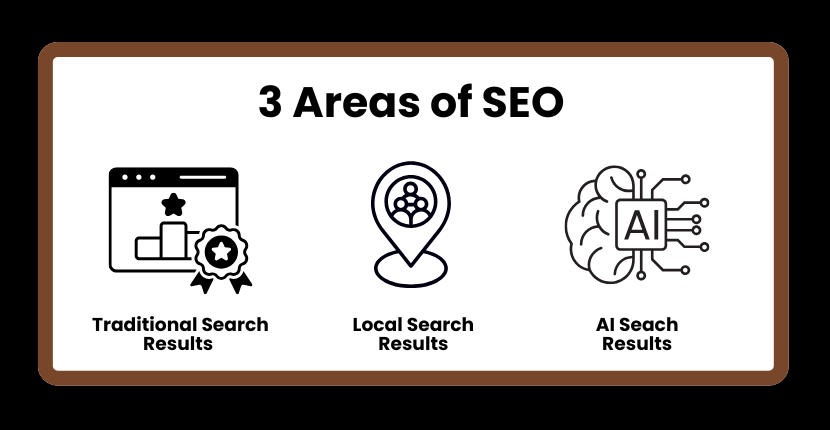
In 2026, roofing SEO covers three areas:
- Traditional SEO — ranking in the organic blue link results on Google
- Local SEO — showing up in Google Maps and the local 3-pack
- AI SEO (GEO) — appearing in responses from ChatGPT, Claude, Gemini, and Google AI Overviews
Winning across all three means your roofing company is visible wherever homeowners are looking. Our SEO services are purpose-built for contractors who want real, measurable growth.
Why SEO Matters for Roofing Companies
Roofing is a high-ticket, high-urgency trade. Homeowners don’t browse page two of Google when water is coming through their ceiling.
Here’s what the data says:
- 97% of consumers go online to find local services
- 46% of all Google searches have local intent (Search Engine Journal)
- The #1 organic result earns a click-through rate above 34%
- SEO leads close at roughly 15% — compared to under 2% for traditional outbound marketing (HubSpot)
- Roofing searches spike dramatically after weather events — the companies on page one capture most of those leads
Roofing jobs average $8,000 to $25,000 or more. A single new customer from organic search can return 10x your monthly SEO investment.
SEO vs. Paid Ads for Roofers
Both PPC advertising and SEO generate leads, but on different timelines. Paid ads deliver visibility immediately — but stop the moment your budget runs out. SEO takes longer to build, but once you’re ranking, that traffic doesn’t stop when you stop paying.
The smartest roofing companies invest in both. PPC fills the pipeline in the short term while SEO builds a long-term foundation that compounds in value over time.
The 3 Types of SEO for Roofing Companies
1. Traditional SEO
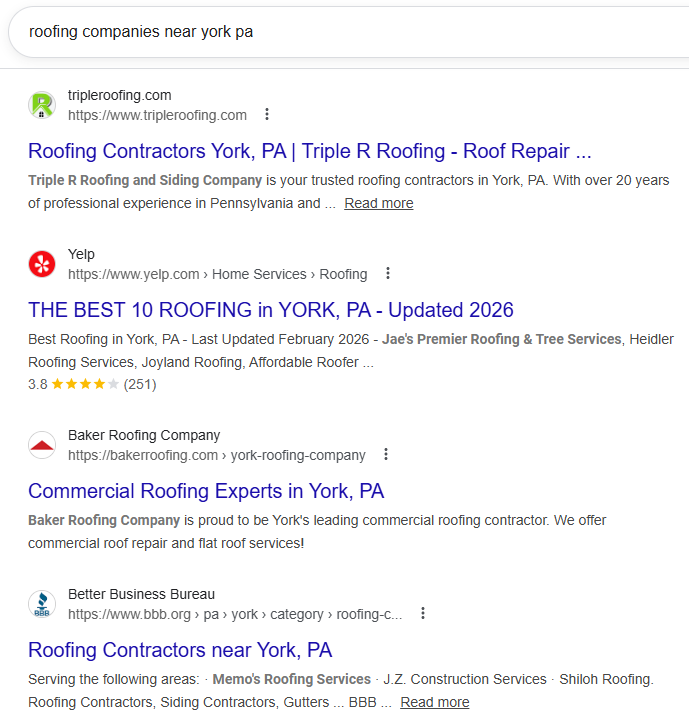
Traditional SEO focuses on ranking in Google’s organic results — the links below any ads or map listings. It’s built on quality content, a technically sound website, and backlinks from reputable sources.
Core components include keyword research, on-page optimization, content marketing, backlinks, and technical SEO. Tools like Ahrefs and SEMrush help track keyword opportunities and rankings over time.
2. Local SEO
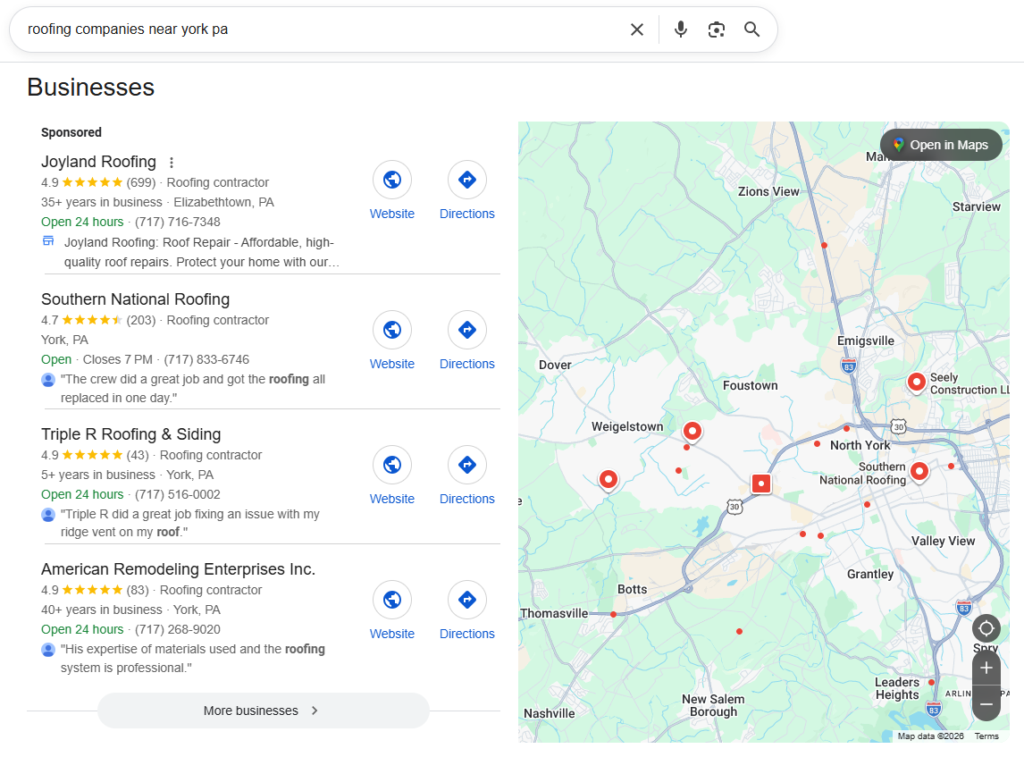
Local SEO determines whether your business appears in the Google Map Pack — the three listings at the top of local searches with a map and star ratings.
For most roofing companies, this is the highest-impact area of SEO. Homeowners want a roofer who is nearby and responsive. Local SEO helps you show up for searches like “roofing contractor near me” or “roof repair in York PA.”
For a deeper look, check out our local SEO for contractors guide.
3. AI SEO
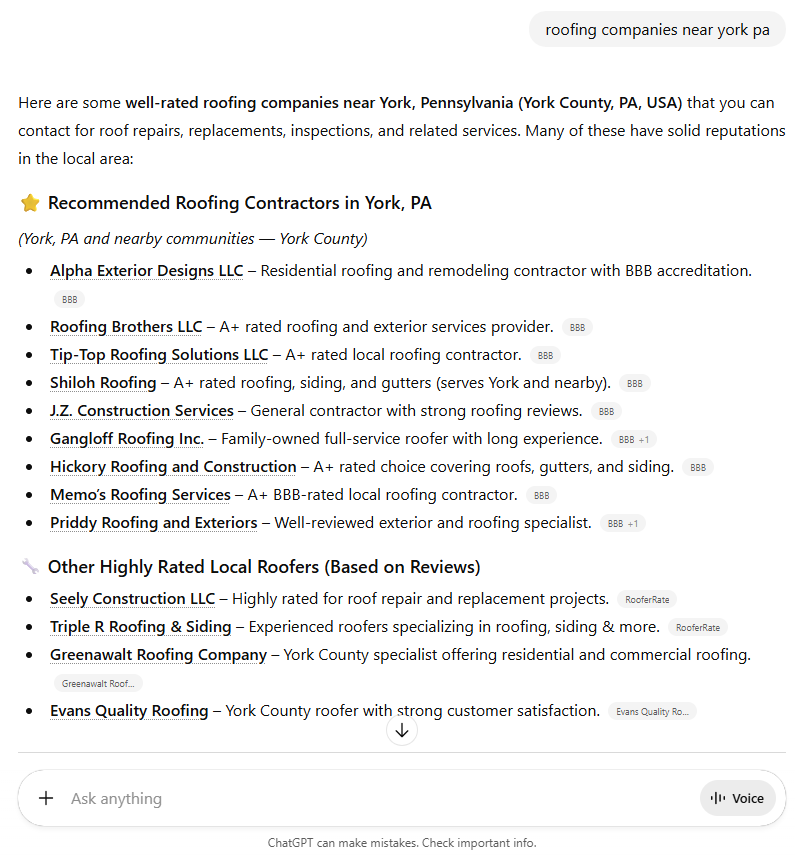
More homeowners now ask ChatGPT, Google AI Overviews, and Claude questions like “who are the best roofing companies near me?” before visiting any website.
Generative Engine Optimization (GEO) means structuring your content and online presence so AI tools recommend your business. Key strategies include schema markup, conversational FAQ content, consistent business information, and building authority through reviews and backlinks.
We cover this fully in our AI SEO for Contractors guide.
Google Business Profile: Your Biggest Local SEO Opportunity
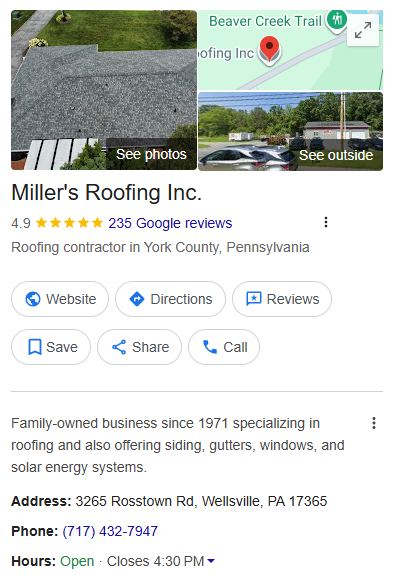
If you do one thing from this guide, fully optimize your Google Business Profile (GBP). It’s the primary signal Google uses to decide whether to include you in the local map pack.
How to Optimize Your GBP
Step 1: Claim and verify your listing Go to Google Business Profile, claim your existing listing or create a new one, and complete verification.
Step 2: Complete every field Include your business name, address, phone number, website, hours, service areas, and a description that naturally includes terms like “roofing contractor” and the cities you serve.
Step 3: Choose the right categories Select “Roofing Contractor” as your primary category. Add relevant secondary categories for any additional services you offer.
Step 4: Upload project photos Add real before-and-after photos, crew shots, and truck photos. Businesses with photos receive significantly more website visits and calls than those without.
Step 5: Collect reviews consistently Reviews are one of Google’s strongest local ranking signals. After every job, ask the homeowner for a review and make it easy with a direct link. Respond to every review — positive or negative.
Step 6: Post regular updates Use GBP posts to share recent projects, seasonal promotions, and storm damage resources. Active profiles outrank dormant ones.
Step 7: List your services Add every service you offer with descriptions. This helps Google match your profile to a wider range of relevant searches.
NAP Consistency: The Foundation of Local SEO
NAP stands for Name, Address, and Phone number. Inconsistent NAP information is one of the most common local SEO problems roofing companies face — and one of the easiest to fix.
Google cross-references your business information across dozens of directories. When details don’t match — a different phone number on Yelp, an abbreviated address on HomeAdvisor — Google loses confidence in your listing. That confusion directly hurts your map pack rankings.
Every directory should show the exact same business name, address format, and phone number. Audit your existing listings and fix any discrepancies before investing in anything else.
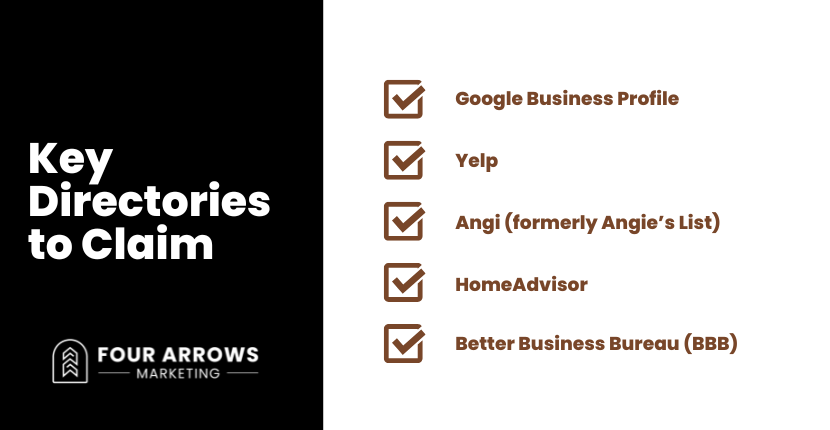
Key Directories to Claim
- Google Business Profile
- Yelp
- Angi
- HomeAdvisor
- Better Business Bureau (BBB)
- Houzz
- Nextdoor
- Facebook Business Page
- Apple Maps
Keyword Research for Roofing Companies
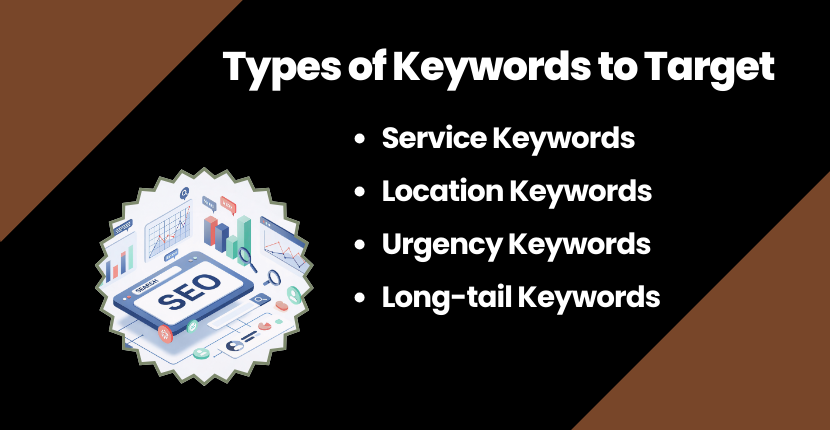
Keyword research means identifying what your customers actually type before they pick up the phone — not what you assume they’re typing.
Types of Keywords to Target
Service keywords: “Roof replacement,” “roof repair,” “storm damage roof repair,” “metal roofing installation”
Location keywords: “Roofing contractor Harrisburg PA,” “roof replacement Lancaster PA,” “emergency roofer York PA”
Urgency keywords: “Emergency roof repair near me” (ready to hire now)
Long-tail keywords: “GAF certified roofing contractor Hershey PA,” “insurance roof claim help Lancaster County”
Use Ahrefs or SEMrush to find opportunities and gauge competition. Google’s “People Also Ask” boxes and autocomplete suggestions are free, real-time research into how your customers search.
On-Page SEO for Roofing Websites
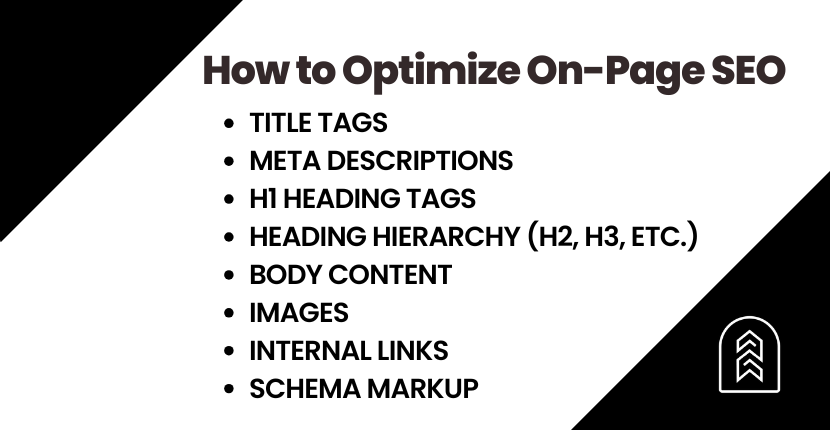
Every important page on your site should be built around one specific keyword or topic.
Key Elements to Optimize
Title Tag: Include your target keyword and location. Example: “Roofing Contractor in Lancaster, PA | [Company Name]”
Meta Description: Write it like an ad — include your keyword and a compelling reason to click.
H1 Heading: One per page, containing your target keyword naturally.
Heading Hierarchy (H2, H3): Use subheadings to organize your content and naturally work in related keywords. A clear structure helps both Google and readers scan the page quickly.
Body Content: Write for the homeowner first. Answer what they came to find out.
Image Alt Text: Describe every image. This helps Google understand your content.
Internal Links: Connect your service pages, location pages, and blog posts to distribute authority across your site.
Schema Markup: Add local business schema so Google and AI systems can accurately identify your business details, hours, and services.
Service Pages and Location Pages
Building a thorough library of service and location pages is one of the highest-impact SEO moves a roofing company can make.
Service Pages
Each roofing service should have its own dedicated page — not a bullet point on a generic services page. A full-service roofing company might have separate pages for:
- Roof replacement
- Roof repair
- Roof inspections
- Storm damage assessment
- Metal roofing
- Gutter installation and repair
- Commercial roofing
Each page targets a specific keyword and gives Google an unambiguous signal about what you offer. This is how roofing contractors compete for dozens of high-value keywords at once.
Location Pages
If you serve multiple cities, build a dedicated page for each one. A roofing company covering Central PA might create pages for Harrisburg, Mechanicsburg, York, Lancaster, Carlisle, and Hershey — each targeting “roofing contractor + [city name].”
At Four Arrows Marketing, we build customized location page strategies tailored to how homeowners search in each specific market.
Content Marketing for Roofers
Publishing regular blog content helps roofing companies rank for informational keywords and build trust with homeowners before they’re ready to make a call.
Think about the questions homeowners ask before hiring a roofer:
- “How long does a roof replacement take?”
- “What are signs I need a new roof?”
- “Will my insurance cover storm damage?”
- “What’s the difference between asphalt and metal roofing?”
If your website answers these questions clearly, Google sends those searchers your way. By the time a homeowner calls you, they already feel like they know and trust your company — which means shorter sales cycles and higher close rates.
According to Backlinko, content that comprehensively covers a topic consistently outranks thin pages for competitive keywords. Publishing regularly also signals to Google that your site is active, which benefits all your pages — not just the blog posts themselves.
Building Backlinks for Roofing Websites
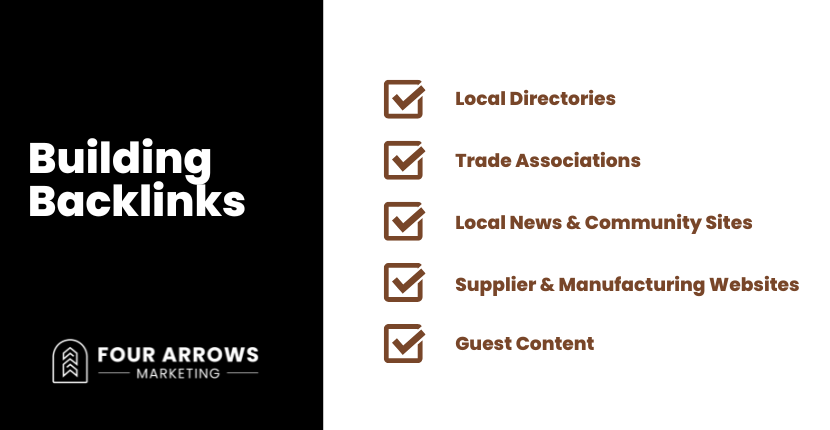
Backlinks — links from other websites to yours — are one of Google’s strongest trust signals. The more credible sites that link to you, the more authoritative your site appears in search results. For competitive roofing keywords, backlinks often make the difference between ranking on page one versus page two.
How Roofers Can Earn Backlinks
- Local directories: Yelp, Angi, HomeAdvisor, and the BBB typically provide a link to your site when you claim your listing.
- Manufacturer certifications: GAF, Owens Corning, and CertainTeed list certified contractors on their websites — often with a backlink. If you’re certified, make sure you’re in their directory.
- Trade associations: NRCA membership includes directory listings with website links and adds credibility to your brand.
- Local community involvement: Sponsoring events, volunteering for storm damage repair programs, or being featured in a local business spotlight often generates links from local news outlets and community websites.
One strong link from a respected local news site or manufacturer is worth far more than dozens of low-quality directory links.
Technical SEO for Roofing Websites
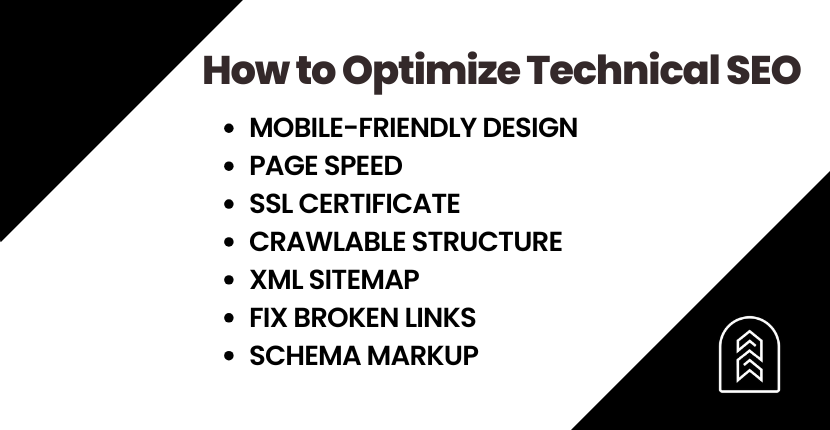
Technical SEO ensures Google can access, read, and rank your website. Strong content and great reviews won’t overcome underlying technical problems.
Technical SEO Checklist
- Mobile-friendly design: Most roofing searches happen on smartphones. Google uses your mobile version to determine rankings.
- Page speed: Compress project photos and use fast hosting. Slow sites hurt user experience and rankings.
- SSL certificate: Your site should show “https://” — not “http://.”
- XML sitemap: Submit one to Google Search Console so Google knows every page on your site.
- Fix broken links: 404 errors waste crawl budget and frustrate visitors.
- Schema markup: Add local business schema so Google and AI tools can accurately describe your roofing company.
Tools like Screaming Frog let you run a full technical audit and find issues worth fixing.
Roofing SEO FAQ
How long does SEO take for a roofing company?
Most roofing companies see meaningful movement within 3 to 6 months of consistent effort. In competitive markets, it may take 6 to 12 months to see significant lead flow from organic search. The key word is consistent — sporadic SEO work produces sporadic results.
SEO compounds over time. The companies that commit to it steadily are the ones that dominate their local market year after year and keep competitors off page one.
What’s the most important SEO strategy for roofers?
A fully optimized Google Business Profile delivers the fastest, most measurable impact for most roofing companies. Beyond that, NAP consistency across directories, dedicated service and location pages with local keywords, and a consistent review generation process offer the highest return in the early stages.
How do I get my roofing company on Google Maps?
Showing up in Google Maps starts with a verified and fully optimized Google Business Profile. Fill out every field, select accurate service categories, upload real project photos, and actively collect reviews from every satisfied customer. Consistent NAP information across all directories and local backlinks strengthen your map pack rankings over time.
How much does roofing SEO cost?
Professional SEO for roofing companies typically ranges from $1,500 to $5,000 per month depending on market competition, number of services and cities being targeted, and scope of work. The better question is what the return looks like — if a single roof replacement generates $12,000 in revenue, it doesn’t take many leads to justify the investment. At Four Arrows Marketing, our goal is to generate at least $3 in revenue for every $1 our clients invest.
Do roofing companies need a blog?
A blog isn’t required to rank, but it’s one of the most effective tools for building topical authority and capturing homeowners earlier in their research process. Roofing companies that publish helpful content consistently tend to outrank those that don’t — especially in competitive markets. It also gives you content to share across social media and in follow-up emails to past customers.
Ready to Grow Your Roofing Business with SEO?
You deserve to work with a digital marketing agency that treats you like a partner — not a number.
At Four Arrows Marketing, we specialize in helping roofing contractors grow through SEO and PPC that actually moves the needle. We’re built on two things: relationships and results.
- Monthly strategy calls so you always know what’s happening
- Weekly updates so you’re never left in the dark
- Monthly performance reports covering leads, revenue, cost per lead, traffic, and rankings
- A goal of generating at least $3 for every $1 you invest
Schedule a call with Four Arrows Marketing and let’s talk about what growth looks like for your roofing business.
–
Written by Adam Gante, Founder of Four Arrows Marketing. Last updated February 2026.
–
Further Reading