
Key Points: SEO for septic companies helps you show up when homeowners search for tank pumping, drain field repair, system inspections, and emergency septic services in your area. This guide covers the exact strategies septic companies need to generate more calls, fill their schedules, and grow revenue through search.
Why SEO Is a Natural Fit for Septic Companies
Septic work is urgent, local, and high-value. When a homeowner’s system backs up or an inspection is overdue, they go straight to Google and call one of the first companies they find.
That makes the search intent for septic keywords some of the strongest of any contractor category. People searching “emergency septic service near me” or “septic tank pumping in [city]” are not browsing. They are ready to book.
If your septic company is not showing up in those results, those calls are going to a competitor.
The good news is that most septic companies have not invested seriously in SEO. That gap is your opportunity. Our SEO services for septic companies are built to help you take advantage of it.
What Is SEO for Septic Companies?
SEO — Search Engine Optimization — is the process of making your septic business easier to find when property owners search for the services you offer.
For septic companies, that means showing up for searches like:
- “Septic tank pumping near me”
- “Drain field repair in [city]”
- “Septic inspection for home sale”
- “Emergency septic service [city]”
- “Grease trap cleaning near me”
- “Septic system installation [county]”
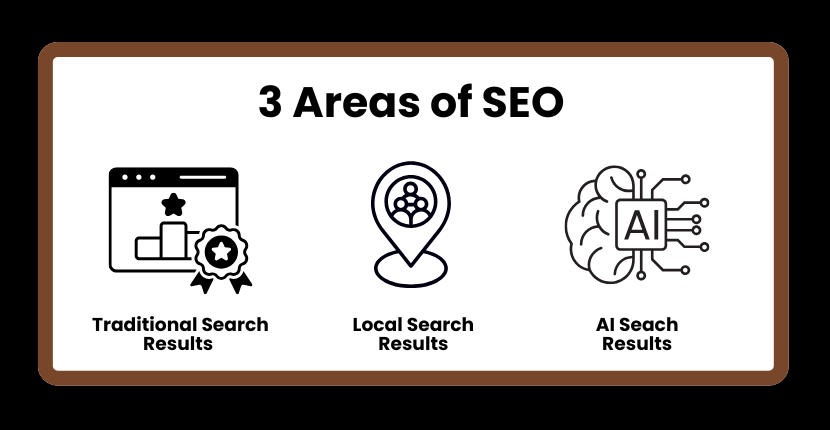
A complete SEO strategy for septic companies covers three areas: traditional SEO for organic rankings, local SEO for Google Maps visibility, and AI SEO for appearing in tools like ChatGPT and Google’s AI Overviews.
The Urgency Advantage: Why Septic SEO Converts So Well
Most contractor searches are planned. Septic searches often aren’t.
A homeowner dealing with a slow drain, a sewage smell, or an active backup is not comparing quotes. They are calling the first reputable company they find — and they need someone available today.
This urgency makes septic SEO uniquely valuable. A well-optimized website captures these high-intent searches at exactly the moment a homeowner is ready to hire.
To capture emergency traffic effectively, your website needs to:
- Display your phone number prominently at the top of every page
- Clearly state your service area and emergency availability
- Have a dedicated emergency septic service page targeting terms like “emergency septic pumping,” “septic backup repair,” and “24-hour septic service”
- Load fast on mobile — most urgent searches happen on a phone
According to Search Engine Journal, emergency and high-intent local searches convert at significantly higher rates than informational queries. Septic companies that optimize for urgency-based keywords capture some of the most valuable traffic available in the home services space.
The 3 Types of SEO for Septic Companies
Traditional SEO for Septic Companies
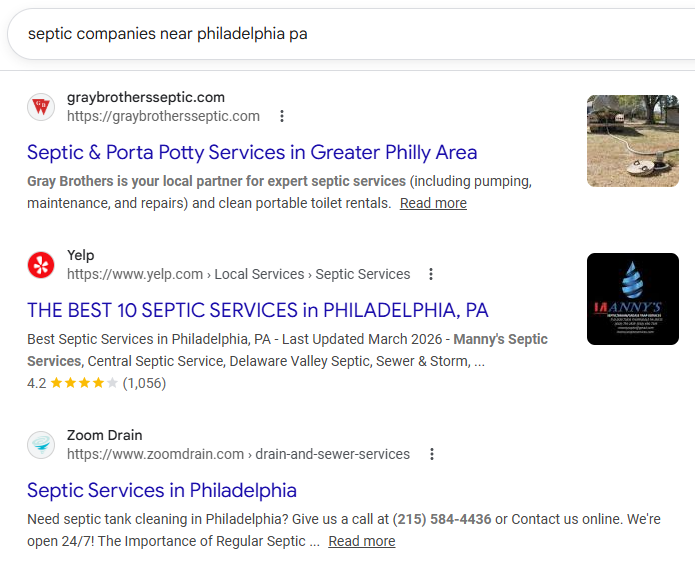
Traditional SEO focuses on ranking in Google’s organic results — the blue links that appear below any ads.
For septic companies, this starts with building a dedicated page for every service you offer. A single “Services” page is not enough. You need separate, optimized pages for:
- Septic tank pumping
- Septic system inspections
- Drain field repair and replacement
- New septic system installation
- Grease trap cleaning
- Emergency septic services
- Real estate septic inspections
Each page should be written around the specific keywords homeowners use when searching for that service. The more focused and thorough each page is, the better it ranks.
Traditional SEO also includes publishing blog content that answers the questions homeowners search before they call. We cover this in the content section below.
Local SEO for Septic Companies
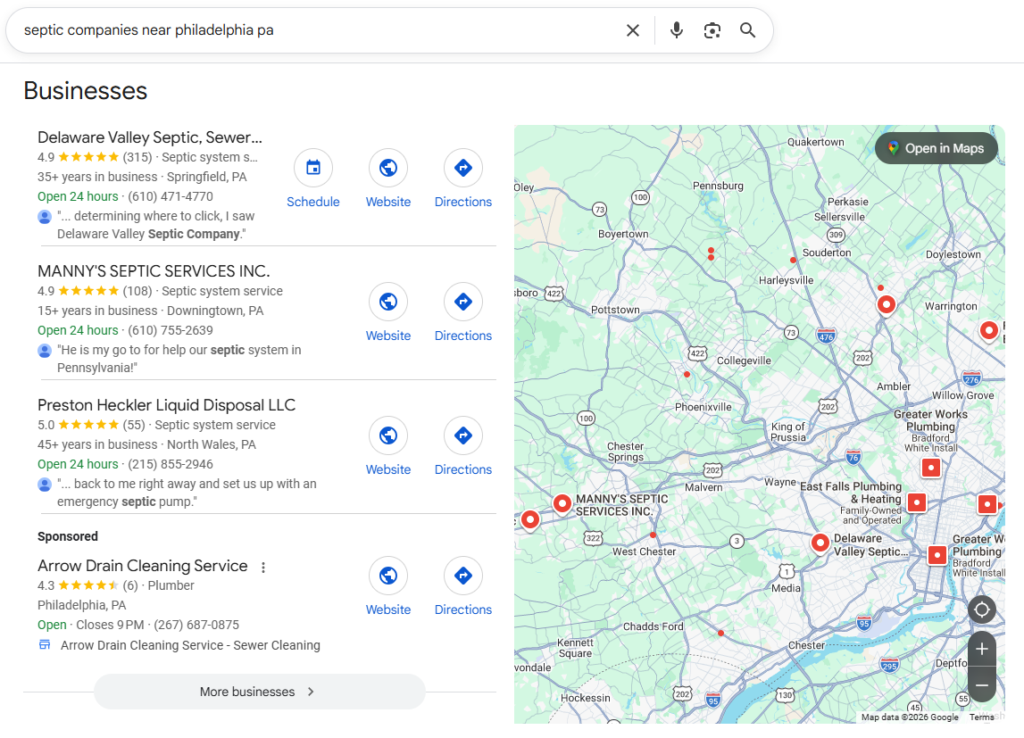
Local SEO determines whether your company shows up in Google Maps and the local 3-pack — the three business listings that appear at the top of local search results.
This is where most septic jobs come from online. A spot in the map pack means more calls, plain and simple.
The foundation of local SEO for septic companies is a fully optimized Google Business Profile. Beyond that, consistent NAP information across directories, active review generation, and location-specific pages on your website are the strongest ranking signals Google uses.
We cover GBP and NAP in dedicated sections below.
AI SEO for Septic Companies
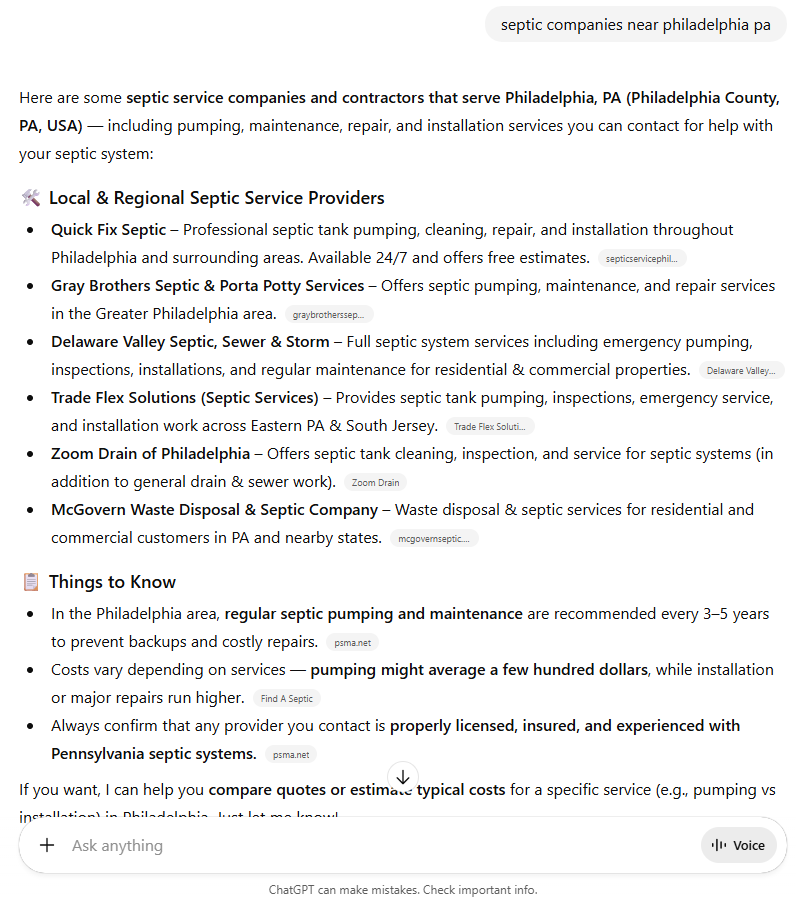
More property owners are using ChatGPT, Claude, Gemini, and Google’s AI Overviews to research septic services before ever visiting a website.
AI SEO — also called Generative Engine Optimization (GEO) — involves structuring your content and online presence so these tools recommend your business.
The fundamentals overlap with traditional SEO: thorough service descriptions, consistent business information, strong reviews, and FAQ content that answers questions in a conversational tone. Septic companies that build strong traditional and local SEO automatically build their GEO foundation at the same time.
Google Business Profile: The Foundation of Local Septic SEO
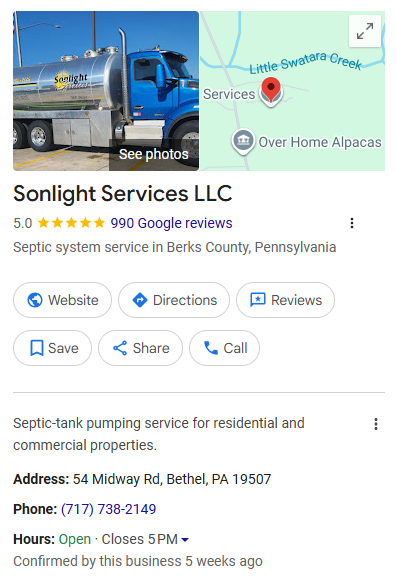
Your Google Business Profile (GBP) is the most important single asset for local septic SEO. It directly controls whether your business appears in Google Maps and the local 3-pack when someone searches for septic services nearby.
Most septic companies either haven’t claimed their profile or have left critical fields incomplete. That alone can be the difference between ranking and not ranking locally.
How to Optimize Your GBP as a Septic Company
Claim and verify your profile. Go to business.google.com and claim your listing. Google verifies your business via postcard, phone, or video. An unverified profile will not rank.
Choose accurate categories. Your primary category should be “Septic System Service.” Add relevant secondary categories like “Drain Cleaning Service” or “Grease Trap Service” based on what you offer.
Complete every field. Business name, address, phone number, website, hours, emergency hours, and service areas. Leave nothing blank. Include every city, township, and ZIP code you serve — not just your business address.
Add septic-specific services. Use Google’s standard services like “Septic Tank Pumping” and “Septic System Repair” and add custom offerings like “Real Estate Septic Inspections” and “Drain Field Restoration.” This helps Google match your profile to the specific searches your customers use.
Upload photos of your operation. Photos of your trucks, equipment, team, and job sites build trust and signal an active, established business. Google rewards profiles that are regularly updated with new photos.
Collect reviews consistently. After every job — pumping, inspection, repair — ask your customer to leave a Google review. Reviews are one of the strongest local ranking signals Google uses. A septic company with 50 five-star reviews will consistently outrank one with 10.
Respond to every review. Responding to reviews signals engagement to Google and professionalism to potential customers. A thoughtful response to a negative review often impresses new customers more than a perfect rating.
Post regular updates. Share seasonal reminders, completed job photos, and service announcements through GBP posts. Active profiles rank better than dormant ones.
NAP Consistency: A Critical Local SEO Factor for Septic Companies
NAP stands for Name, Address, and Phone number. It is the business data Google cross-references across the web to verify your company is legitimate and located where you claim.
The problem for many septic companies is that their business information has been listed — sometimes inconsistently — across dozens of websites over the years. Angi, HomeAdvisor, the BBB, local directories, and others may all show slightly different versions of your name, address, or phone number.
When Google finds conflicting NAP data, it loses confidence in your business information. That directly hurts your local rankings.
Every platform where your septic company appears should show the exact same information — same business name format, same address abbreviations, same phone number format. Audit your listings and fix inconsistencies before doing anything else in local SEO.
Key Directories to Claim for Septic Companies
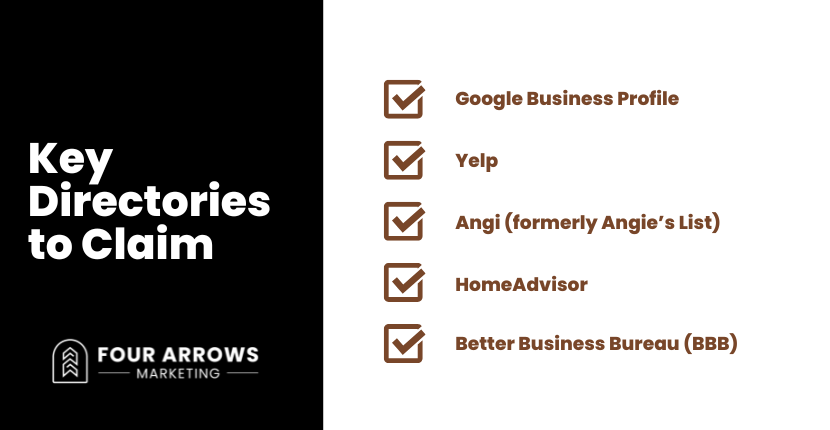
Not every directory carries the same weight. Focus your energy on the platforms homeowners actually use when searching for septic services and the ones Google trusts most when verifying local business information.
Before you add your business to any new directory, make sure your Google Business Profile is complete and accurate first. That becomes your source of truth — every other listing should match it exactly.
- Google Business Profile
- Yelp
- Angi (formerly Angie’s List)
- HomeAdvisor
- Better Business Bureau (BBB)
- And More (Houzz, Nextdoor, Facebook Business Page, Apple Maps)
Claiming and correcting these listings is one of the lowest-effort, highest-impact local SEO tasks a septic company can complete.
Septic-Specific Content That Attracts Homeowners Before They Call

Homeowners often research their septic system for weeks before picking up the phone — especially when they suspect a problem but aren’t sure how serious it is.
If your website answers their questions, Google sends those homeowners to you. You build trust with potential customers before they’re ready to hire. And when they’re ready to call, they already feel like they know your company.
Content Ideas That Work for Septic Companies
Maintenance and pumping guides
- How often should a septic tank be pumped?
- How to tell when your septic tank is full
- What does a septic system inspection include?
Problem and warning content
- Signs of a failing drain field
- What to do if your septic system backs up
- Why does my yard smell like sewage?
- What not to flush if you have a septic system
Real estate content
- How to prepare for a septic inspection when selling your home
- What buyers need to know about homes with septic systems
- How long does a septic system last?
The real estate angle deserves special attention. When a home with a septic system is bought or sold, a septic inspection is typically required. That creates a consistent, predictable stream of inspection jobs — and the homeowners and real estate agents searching for this service are highly motivated to book quickly.
Owning the content around real estate septic inspections in your market is a meaningful competitive advantage that most septic companies ignore.
Seasonal and location content
- Septic system care tips for Pennsylvania winters
- What to do if your septic tank freezes
- “We just completed a drain field repair in [City]” project features
According to Backlinko, content that comprehensively addresses real customer questions consistently outranks thin, generic pages. Publishing this type of content regularly also signals to Google that your site is active and authoritative — which benefits your service and location pages too.
Keyword Research for Septic Companies
Most septic companies target one or two broad keywords and stop. That leaves significant lead generation on the table.
Customers search in specific ways. Targeting those specific phrases — even when they have lower search volume — captures buyers rather than browsers.
Types of Keywords Septic Companies Should Target
Service-specific keywords
- “Septic tank pumping”
- “Drain field repair”
- “Septic system inspection”
- “Grease trap cleaning”
- “Septic tank installation”
Location + service keywords
- “Septic pumping in York PA”
- “Drain field repair Harrisburg”
- “Septic inspection Lancaster County”
- “Emergency septic service Mechanicsburg”
Urgency keywords
- “Emergency septic pumping near me”
- “Septic backup repair”
- “24-hour septic service”
Real estate keywords
- “Septic inspection for home sale near me”
- “Pre-purchase septic inspection [city]”
Informational keywords
- “How often should a septic tank be pumped”
- “Signs of a failing drain field”
- “How long does a septic system last”
Tools like Ahrefs and SEMrush help you identify exact search volumes in your market and find the specific keyword opportunities your competitors are ranking for that you aren’t yet.
The SEO Checklist for Septic Companies
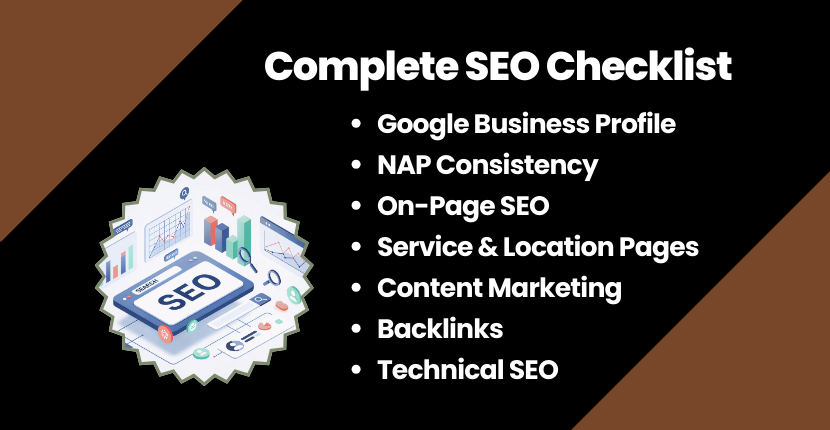
Google Business Profile
- Claimed and verified
- Primary category set to “Septic System Service”
- Relevant secondary categories added
- All service areas and cities defined
- Septic-specific services listed including real estate inspections
- Emergency hours noted
- Photos of trucks, team, and job sites uploaded regularly
- Reviews requested after every job
- Every review responded to
- Regular GBP posts published
NAP Consistency
- Business name is identical across every platform
- Address format is consistent everywhere
- Phone number format is consistent everywhere
- Google, Angi, HomeAdvisor, Yelp, BBB, Nextdoor, Facebook, and Apple Maps all claimed and matching
On-Page SEO
- Dedicated page for each service (pumping, inspections, drain field repair, installation, grease trap, emergency, real estate inspections)
- Title tags include target keyword and location
- Meta descriptions written for every page
- One H1 per page with the target keyword
- Proper H2 and H3 structure throughout
- Images include descriptive alt text
- Internal links connect service pages, location pages, and blog posts
- Phone number visible at the top of every page
Service & Location Pages
- Dedicated page for each service (pumping, inspections, drain field repair, installation, grease trap, emergency, real estate inspections)
- Each service page targets a specific keyword with unique, helpful content
- Dedicated page for every city and township served
- Each location page has unique, locally relevant content
- Each location page targets “[service] in [city]” keywords
Content Marketing
- Maintenance and pumping guides published
- Warning sign and problem content published
- Real estate septic inspection content published
- Seasonal and project-specific content published regularly
Technical SEO
- Site loads in under 3 seconds on mobile
- SSL certificate active (https://)
- XML sitemap submitted to Google Search Console
- Local business schema markup implemented
- No broken links or crawl errors
Septic Company SEO FAQ
What keywords should septic companies target for SEO?
Start with location-specific service keywords — “septic tank pumping in [city]” or “drain field repair [county].” Then build out pages for emergency services, real estate inspections, and each additional service you offer.
Informational keywords like “how often should a septic tank be pumped” bring in homeowners during the research phase and establish your authority. Tools like Ahrefs help you identify which opportunities are most worth pursuing in your specific market.
How is SEO for septic companies different from other contractor SEO?
The urgency factor is the biggest differentiator. Septic emergencies drive some of the highest-converting searches in the home services space.
Septic companies also have a unique content opportunity around real estate transactions that most other contractor categories don’t have. Pre-purchase and pre-sale septic inspections create predictable, recurring demand that a well-optimized content strategy can capture consistently.
How do I get my septic company to show up on Google Maps?
A verified and fully optimized Google Business Profile is the starting point.
From there, consistent NAP information across directories, a steady stream of Google reviews, and dedicated location pages on your website are the strongest signals Google uses to rank companies in the local map pack.
How long does SEO take for a septic company?
Google Business Profile improvements can show up in local results within a few weeks. Organic rankings for service and location pages typically take three to six months of consistent effort.
The longer you invest, the more it compounds. Septic companies that have been doing SEO consistently for a year or more often find that organic search becomes their most reliable lead source.
Do reviews affect local SEO rankings for septic companies?
Yes — significantly. Review volume, recency, and average rating are direct local ranking factors.
A septic company with 60 recent five-star reviews will rank higher and convert more visitors than one with 15, even if everything else is equal. Building a review generation process — asking every customer after every job — is one of the highest-ROI habits a septic company can build.
Is SEO worth it for a smaller septic operation?
Absolutely. Local competition for septic keywords is more manageable than most contractor categories, which means a focused strategy can move the needle faster.
Many smaller septic companies outrank larger regional players simply by being more consistent with their Google Business Profile, their reviews, and their website content.
Ready to Grow Your Septic Business with SEO?
You deserve to work with a digital marketing agency that values you and gets you a return on your investment.
Four Arrows Marketing is the top digital marketing agency for contractors. We work exclusively with contractors — including septic companies — and we understand the industry, the customers, and what it takes to generate real leads from search.
Adam Gante, founder of Four Arrows Marketing, has nearly a decade of experience in SEO. He built this agency for contractors who are tired of agencies that over-promise, under-deliver, and leave them in the dark.
Here’s what working with us looks like:
- Monthly strategy calls so you always know what’s happening and why
- Weekly updates so you’re never left guessing
- Monthly performance reports covering leads, revenue, cost per lead, traffic, and rankings
- A goal of generating at least $3 for every $1 you invest
If you’re a septic company ready to stop relying on referrals and start generating consistent inbound leads, we’d love to talk.
Schedule a call with Four Arrows Marketing and let’s build a plan for your septic business.
–
Written by Adam Gante, Founder of Four Arrows Marketing. Last updated February 2026.
–
Further Reading