
Key Points: Septic problems do not give homeowners much warning. When something goes wrong, they go straight to Google, and the company at the top of the results gets the call. Google Ads puts your septic business in front of homeowners at their highest moment of need, which means a more consistent schedule, more predictable cash flow, and less dependence on referrals to stay busy.
When a Septic System Fails, Google Is the First Call
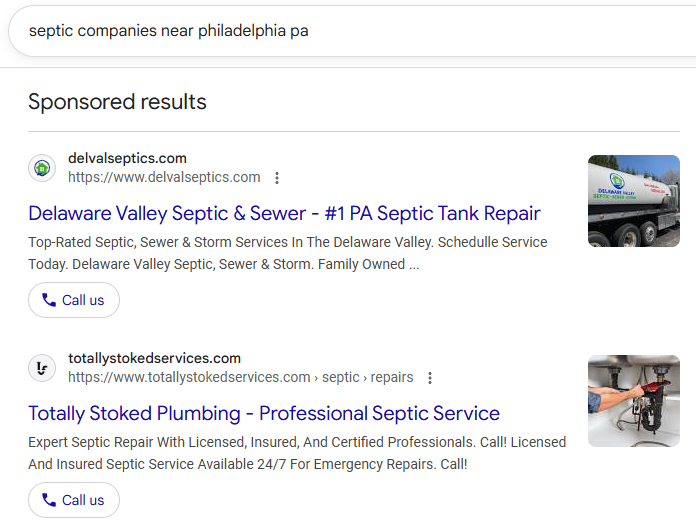
Septic emergencies have a way of making the decision for the homeowner. A drain that stops working, a yard that smells like something is wrong, or a system alarm going off at 9 PM on a Saturday does not leave much time for comparison shopping. The homeowner grabs their phone, types something into Google, and calls whoever shows up first with a strong reputation.
That urgency is exactly why Google Ads is one of the most effective tools available to septic companies. According to the Environmental Protection Agency, more than one in five U.S. households relies on a septic system, and in rural and suburban markets like Central PA, that number is even higher. Those homeowners need pumping, inspections, repairs, and eventually full system replacements, and a growing share of them start that search online.
The difference between a contractor who runs a tight, well-managed Google Ads campaign and one who does not can come down to dozens of missed calls per month. Those calls go somewhere. The question is whether they go to you or to a competitor who figured out paid search first.
The Real Reason Google Ads Does Not Always Work for Septic Contractors
Septic company owners who have tried Google Ads without much success tend to blame the platform. In most cases, the platform is not the problem. The setup is.
A campaign that is not built specifically for the septic industry will burn money in predictable ways. Broad match keywords pull in searches from people looking to buy septic tanks, troubleshoot their own system, or find septic certifications for a new career. Ads pointed at a 50-mile radius might generate calls from counties where you do not even operate. A landing page that dumps someone onto your homepage after they searched for emergency septic service in Harrisburg is not going to convert well, no matter how good the ad was.
There is also a trust problem that comes with hiring an agency that does not know the trade. A generalist shop learning your industry on your dime is going to make costly mistakes that an experienced contractor marketing agency already knows to avoid. At Four Arrows Marketing, we focus exclusively on contractors, which means we understand service area targeting, seasonal demand, and what actually makes a septic homeowner pick up the phone.
Google Ads and SEO Work Better Together
A common fork in the road for septic business owners comes when they start thinking about digital marketing: do we do paid ads or do we invest in SEO? Treating them as an either/or decision leaves money on the table.
SEO for septic contractors takes time to build. Getting your website to rank on the first page for searches like “septic pumping near me” or “septic repair Lancaster PA” is a process that plays out over months, sometimes longer in competitive markets. It is absolutely worth doing, but it does not generate leads on day one.
Google Ads does. A well-built campaign can be generating phone calls within the first week it goes live. That immediate lead flow keeps revenue coming in while your organic presence grows in the background.
The businesses that scale the fastest use both. As SEO gains traction for specific keywords or locations, ad spend in those areas can be pulled back and redirected to markets or services that still need visibility. It becomes a self-reinforcing cycle where paid search funds growth and organic search reduces how much paid search you need over time. You can read more about how we approach this balance on our PPC services page.
Which Google Ad Formats Make Sense for Septic Companies
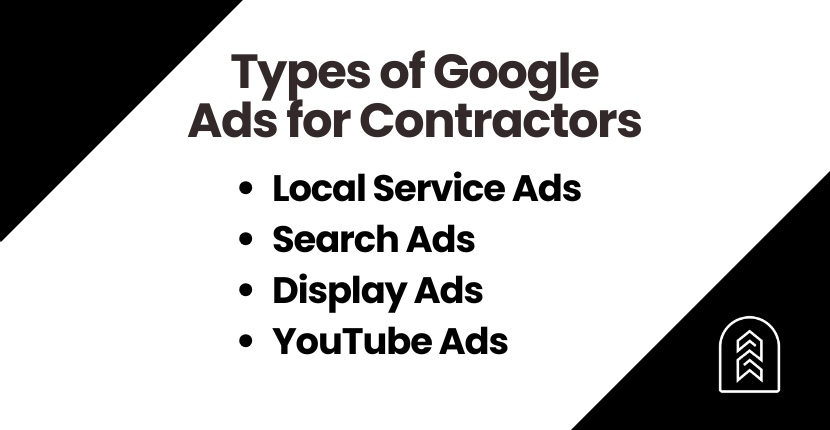
Local Services Ads
Local Services Ads sit at the very top of Google search results, above every other ad type and every organic listing. They show your business name, your star rating, and a Google Guaranteed badge that tells homeowners your company has passed background checks and license verification.
For septic companies, this badge carries real weight. You are asking someone to schedule a service call at their home for a system that sits underneath their yard. That kind of trust signal matters before the homeowner even visits your website. The National Onsite Wastewater Recycling Association notes that consumer confidence in service providers is one of the leading factors homeowners consider when selecting a septic contractor.
Local Services Ads charge per lead rather than per click, which changes the math significantly compared to standard search campaigns.
Search Ads
Search Ads are the text-based results that appear when someone types a specific query. For septic companies, these tend to be the most valuable ad type in the mix because the intent behind the search is almost always clear. Someone typing “septic tank pumping Mechanicsburg PA” knows exactly what they need and is ready to act.
Getting the most out of Search Ads comes down to message match. The search someone typed, the ad copy they see, and the page they land on should all be in complete alignment. A homeowner searching for drain field repair is not well served by an ad that leads to a general page about your full range of services. Each core service you advertise should have its own dedicated landing page built around that specific topic.
Remarketing With Display Ads
Not every septic job is an emergency. Homeowners researching a full system replacement, an aerobic treatment unit installation, or a drain field repair will often spend several days visiting multiple websites before they commit to calling. Display Ads let you keep your company visible to those visitors as they continue their research elsewhere on the web.
Remarketing works best for higher-ticket, planned projects rather than urgent calls where the homeowner is picking up the phone within minutes of searching. For those larger jobs, staying in front of someone across multiple touchpoints before they make a decision is a genuine competitive advantage.
YouTube Ads
A short video explaining what a septic inspection actually involves, or walking a homeowner through how to tell when it is time to pump, does something that a headline and a phone number cannot. It demonstrates expertise before the first conversation ever happens.
YouTube Ads are most useful for building awareness and trust rather than driving immediate calls. They pair well with a broader remarketing strategy targeting homeowners who have already visited your website and shown interest in your services.
The First Three Months of a Septic PPC Campaign
Understanding what a new campaign looks like from launch through the first 90 days makes a significant difference in whether business owners stick with it long enough to see real results.
The opening weeks are largely about data collection. Google is identifying patterns in who clicks, how they behave after landing on your page, and which searches are actually turning into conversion events. Making large-scale changes during this window tends to reset that process and push back the point where the campaign starts performing predictably.
Around weeks three through six, the search term report becomes genuinely useful. You will start seeing the exact phrases people typed before clicking your ad, and some of them will have nothing to do with hiring a septic company. Septic supply searches, DIY repair queries, real estate disclosure searches, and terms from adjacent trades all show up in accounts that have not been carefully filtered from the start. Adding those terms to your negative keyword list is one of the highest-return activities in early campaign management.
By the end of month three, the data is strong enough to make confident decisions. Which keywords are driving booked jobs. Which ad copy is generating calls and which is being ignored. Which landing pages are turning clicks into conversations. That is the point where experienced campaign management starts to move the numbers in a meaningful direction.
Five Things That Separate Profitable Septic Campaigns From Average Ones
1. Ground Your Budget in Actual Job Values
Septic services cover a wide range of ticket sizes. A routine pumping call is a very different job than a full system replacement, which can run anywhere from $10,000 to $25,000 depending on the system type and site conditions. Before deciding what to spend on ads, calculate what the average job across your full service mix is worth to your business. That number tells you how much you can afford to pay per lead and still come out ahead.
2. Filter Out Irrelevant Traffic From Day One
Negative keywords are not optional, they are foundational. Terms like “DIY,” “how to,” “permit,” “jobs,” “training,” “cost calculator,” and “parts” attract people who are not looking to hire anyone. Load your negative keyword list before the first ad ever goes live and review your search terms every week during the early months. New terms worth filtering will keep showing up.
3. Give Each Service Its Own Landing Page
Sending all of your ad traffic to the same generic page is one of the fastest ways to waste a paid search budget. A homeowner who searched for “septic inspection before buying a house” should land on a page that speaks directly to that situation, not a page that lists everything your company does. According to Search Engine Land, dedicated landing pages consistently outperform homepage traffic when it comes to converting paid search visitors into actual leads.
4. Track Every Call Back to Its Source
Call tracking is what separates guessing from knowing. When you can see that your emergency septic campaign generated 14 calls last month at a cost of $68 each, and your pumping campaign generated 9 calls at $44 each, you can make real decisions about where to put your next dollar. Tools like CallRail assign unique phone numbers to each ad so every inbound call gets attributed back to the exact campaign and keyword that drove it. That data feeds back into Google Ads as a conversion signal and helps the algorithm improve over time.
5. Increase Bids When Emergencies Happen
Septic emergencies do not wait for Monday morning. Weekend evenings, holidays, and overnight hours are when homeowners discover a backed-up system or a yard that tells them something is very wrong. If you offer emergency service, your campaign settings should reflect that with higher bids during those windows. The Water Environment Federation has documented that after-hours and weekend demand for wastewater system services represents a disproportionate share of annual residential service revenue. Being visible during those hours is not a nice-to-have, it is a competitive necessity.
FAQ: PPC for Septic Companies
What types of septic services are worth advertising on Google Ads?
Most of your highest-return ad spend will be on services with strong search volume and clear homeowner intent. Emergency pumping, routine pumping, septic inspections for real estate transactions, drain field repair, and full system replacement all perform well as standalone campaigns. Real estate inspection searches tend to spike in spring and summer when home sales pick up, which makes seasonal bid adjustments worth building in advance. Services with lower search volume may not justify their own campaigns early on, but can be layered in as the account matures and you have more data to work with.
Do homeowners actually search Google for septic services, or do they rely on referrals?
Both happen, but the balance has shifted considerably toward search. Referrals still carry weight, especially in tight-knit communities, but a homeowner dealing with an active septic backup at 8 PM on a Friday is not waiting to ask a neighbor for a recommendation. They are searching Google and calling whoever appears trustworthy and available. The National Ground Water Association has found that online search is now the primary channel through which homeowners find water and wastewater service providers for the first time. Referrals tend to reinforce a decision rather than initiate it.
My septic company also handles grease trap cleaning and portable toilet rentals. Should those be in the same campaign?
No, and keeping them separate will save you money and improve your results significantly. Grease trap cleaning is driven by commercial clients on a maintenance schedule, which is an entirely different audience from a homeowner with a residential septic emergency. Portable toilet rentals are often event-driven and carry their own search patterns throughout the year. Running all three service lines under one campaign makes it nearly impossible to understand which is actually profitable from an ad spend perspective. Each service deserves its own campaign structure, budget, and landing page.
What is a realistic cost per lead for a septic Google Ads campaign?
In a market like Central PA, most septic companies see cost per lead land somewhere between $45 and $100 for routine service calls. Emergency searches tend to cost more per lead but justify the spend because urgency drives higher conversion rates and job values are typically larger. Full system replacements can cost more to generate a lead but return multiples of what a single pumping job would. The goal is not the lowest possible cost per lead. It is the strongest return on your total investment.
Is it worth running Google Ads year-round, or should I scale back in winter?
Scaling back during slower periods is almost always smarter than pausing entirely. Shutting the campaign down clears the performance history Google has built up about your ideal customer, and restarting means rebuilding from scratch. A lighter budget through slower months keeps the account active, protects your Quality Score, and makes sure you are still capturing calls for the jobs that come in regardless of season. Septic emergencies, real estate inspections, and system repairs happen year-round, and those are exactly the calls worth staying visible for.
Ready to Bring in More Consistent Leads?

Feast-or-famine scheduling makes it hard to grow a septic business with any real confidence. It complicates hiring decisions, creates cash flow swings, and turns planning into guesswork. A properly managed Google Ads campaign gives you a more reliable pipeline of qualified calls so you can make decisions about staffing, equipment, and growth based on something more solid than hoping the phone rings.
Four Arrows Marketing manages PPC campaigns for septic companies and contractors across Central PA. Every client gets monthly strategy calls, weekly updates, and reporting that clearly connects ad spend to actual leads and booked revenue.
Schedule a call today to talk through what a paid search strategy built specifically for your septic company could look like.
–
Written by Adam Gante, Founder of Four Arrows Marketing. Last updated May 2026.
–