
Key takeaways: Most homeowners do not go looking for a foundation repair company until something forces their hand. A crack they have been ignoring finally runs floor to ceiling. A basement door sticks shut. Water shows up after every heavy rain. Whatever the trigger, by the time someone types a search into Google, the decision to hire someone has basically already been made. The only question left is which company gets the call. Google Ads puts your business in front of that person at the exact right moment, before they scroll past you and dial someone else. If your current growth strategy depends mostly on referrals and hoping past customers spread the word, paid search is how you build a pipeline you actually control.
Foundation Repair Leads Have a Psychology All Their Own
Generating leads for a foundation repair company is not like marketing for most other trades. When a homeowner needs their gutters cleaned or their lawn mowed, they shop around, compare prices, and take their time. Foundation problems feel different. There is real fear involved. People worry about structural safety. They wonder what this is going to cost them. They stress about whether this issue will kill the sale of their home down the road.
Most people who search for foundation repair have been sitting on a concern for weeks, sometimes longer. They noticed something, convinced themselves it was probably nothing, noticed it again, and eventually decided to stop guessing and find someone who can tell them what they are actually dealing with. That combination of anxiety and readiness to act is unlike almost anything else in home services marketing, and the best-performing campaigns are built with that in mind.
Generic contractor advertising does not work here. Messaging that speaks directly to what a homeowner is feeling, paired with landing pages that answer the questions running through their head, is what turns clicks into calls.
Why Paid Search Makes Sense for This Industry
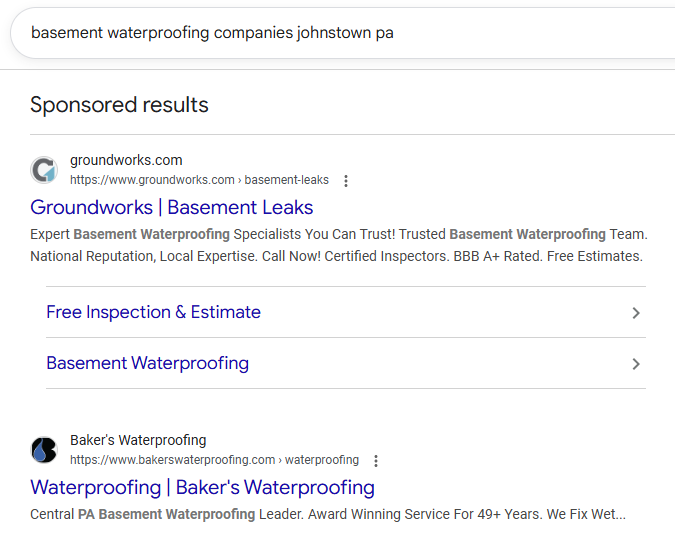
The foundation repair industry in the U.S. employs over 78,500 workers and has grown consistently thanks to aging housing stock, shifting soil conditions, and more frequent heavy rain events. Demand is not going away, and virtually all of it starts with an online search.
What surprises a lot of foundation repair owners is how little the quality of their work factors into who gets the phone call. The homeowner searching from their kitchen has no way to evaluate craftsmanship before they dial. What they can evaluate is who shows up at the top of the page, who looks credible, and who makes it easy to take the next step. Companies that invest in their visibility win a disproportionate share of the leads in their market, regardless of whether they have been in business for two years or twenty.
Organic SEO can get you to that top position eventually, but the timeline is real. It typically takes six months to a year of consistent work before rankings stabilize for competitive terms like “foundation repair” or “basement waterproofing” in your city. A well-run paid search campaign can start producing calls in a matter of weeks. For a business trying to fill an estimate calendar now, that difference matters.
The Most Common Reasons Foundation Repair Campaigns Fail
Google Ads gets blamed for a lot of results it did not actually cause. Most of the time when a foundation repair company tries paid search, spends a few hundred dollars, and shuts everything down, the platform itself was not the issue. The account was.
Sloppy keyword targeting is almost always the first culprit. Terms like “foundation” and “crack” attract a huge volume of searches from people who have no intention of hiring anyone. Someone searching “how do I fill a foundation crack myself” or “foundation crack filler Lowe’s” is not a buyer. Neither is the person searching “what causes basement wall cracks” or “do cracks in foundation affect home value.” Paying to show up for those queries burns through budget fast and produces nothing useful.
The second common failure is sending clicks to the wrong page. A homeowner who searched specifically for “bowing basement wall repair” and lands on your homepage is going to scan for a few seconds, not see anything immediately relevant, and leave. They are not going to hunt through your navigation to figure out if you handle that service. A focused landing page that speaks directly to what they searched for is what keeps them on the site long enough to call.
At Four Arrows Marketing, we only work with contractors, so our campaigns are built around how people actually search for trade services. We are not applying a playbook built for e-commerce or lead generation. If you want to understand how we approach contractor marketing more broadly, our SEO for Contractors guide walks through the full picture.
Running Google Ads and SEO at the Same Time
A lot of owners treat paid search and SEO as competing budget items, as if choosing one means ignoring the other. The reality is that they serve different purposes on different timelines, and running both at once produces better results than either channel can deliver on its own.
Paid search delivers speed. A properly structured campaign can generate phone calls within the first few weeks of launch. SEO builds compounding visibility over time, eventually producing organic traffic that does not cost you anything per click. The two are not competing. They are complementary.
There is also an intelligence angle that most owners miss. Your Google Ads account functions as a live research tool for your market. Within the first month or two, you learn which services drive the most searches, which towns send the best leads, and which phrases actually convince people to click. Feeding that data into your SEO work means you are building content around confirmed demand, not guesses. Running both channels together is how a foundation repair company gradually owns more of the first page and lowers its cost per lead over time.
The Ad Formats Worth Understanding
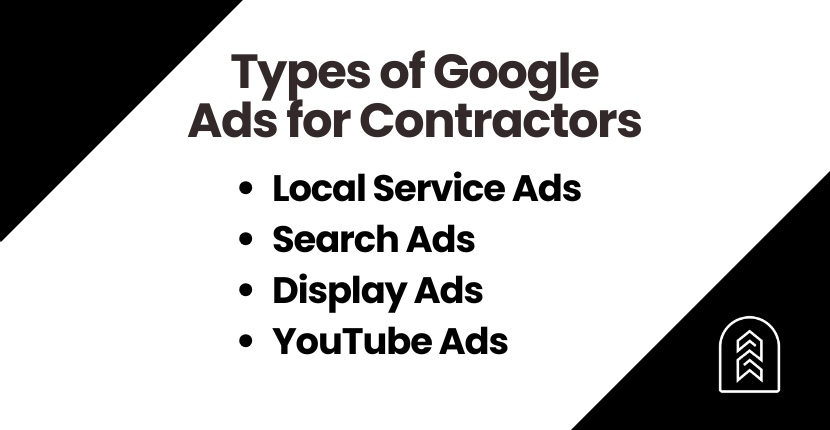
Local Services Ads
Local Services Ads sit above everything else on the search results page, above traditional text ads and above the map pack. They display your business name, star rating, and a Google Guaranteed badge confirming you have passed background checks and license verification. For foundation repair, that badge carries real weight. You are asking someone to let your crew dig around the perimeter of their home or spend days working in their basement. Any signal that reduces their uncertainty about hiring you moves the needle. You can learn more about the program and apply at Google’s Local Services Ads page. Unlike standard ads where you pay per click, Local Services Ads charge per lead, which keeps your cost structure cleaner on high-intent searches.
Search Ads
Search Ads are the familiar text listings that appear when someone types a query. For foundation repair, these tend to deliver the highest return because the intent behind the search is so clear. Someone typing “helical pier installation near me” or “wet basement repair Harrisburg PA” is not doing research. They are looking to book. The difference between a Search campaign that generates revenue and one that drains it comes down to how tightly the keyword, the ad copy, and the landing page match each other. A crawl space encapsulation ad should go to a crawl space encapsulation landing page, not a general services overview. That alignment is what converts clicks into estimates.
Display Ads
Foundation repair is rarely an impulse purchase, especially for larger jobs. A homeowner getting quotes for a full perimeter drainage system or carbon fiber wall reinforcement is going to take time to think it over. Display Ads let you retarget those visitors while they browse other sites, keeping your company name familiar while they decide. For high-ticket jobs, staying in front of a prospect during a two-week decision window can be what tips them your way.
YouTube Ads
Foundation repair is inherently hard to explain in text. Showing a homeowner exactly what a helical pier installation looks like, how your crew protects their landscaping, or what a finished waterproofed basement looks like before and after does more to build confidence than any written description. A well-produced short video, paired with retargeting, keeps your brand visible and your work credible while someone is still comparing their options.
What to Expect in the First Three Months
The early weeks of a new campaign feel slow, and that is by design. Google’s system is learning, and the most productive thing you can do during that period is give it room to gather data without constantly adjusting settings. Frequent changes reset the learning cycle and extend the timeline before results stabilize.
The search terms report is where you spend most of your early attention. It shows you every actual query that triggered one of your ads. The list almost always includes searches that do not belong in the campaign, things like “foundation repair technician jobs,” “DIY pier installation,” “home inspection checklist,” and “what causes crawl space moisture.” Adding these to your negative keyword list is one of the highest-leverage tasks in the first sixty days.
By the three-month mark, the data is reliable enough to make real decisions. You can see which services generate qualified calls, which zip codes produce the best leads, and where your budget produces the strongest return. That is the point where a campaign stops being a setup project and starts being a growth engine.
What Separates the Campaigns That Work
Start with your numbers. A crack injection job and a full foundation stabilization project are not in the same revenue category. Before you set a monthly budget, know your average job value and your rough close rate on estimates. Those two numbers tell you exactly what you can afford to spend to acquire a lead and still profit.
Build your negative keyword list on day one. Do not wait for the search terms report to surface bad traffic. Start with filters for terms like “foundation repair jobs,” “DIY crack filler,” “foundation inspection checklist,” “what causes foundation settling,” and “foundation repair cost estimator.” Then review the report weekly and keep adding.
Every service gets its own landing page. Basement waterproofing, crawl space encapsulation, bowing wall repair, and drainage systems are four different services that homeowners search for differently. Each one deserves a dedicated page with real job photos, specific service details, trust signals like insurance and warranty information, and a phone number or form that is easy to find.
Track every call. The majority of foundation repair leads come in by phone, not form submission. Without a call tracking tool like CallRail, you have no way to know which keywords are actually producing jobs. Tracking numbers tied to specific ads and campaigns take the guesswork out of where your budget is working.
Pay attention to seasonality. Spring is when homeowners start noticing what winter did to their foundation. After a stretch of heavy rain, wet basement searches spike. Being fully live and visible at those moments, not scrambling to turn a campaign on after the fact, is a meaningful competitive advantage.
FAQ: PPC for Foundation Repair Companies
My competitor seems to show up everywhere on Google. How do they do that, and can I compete with them?
What looks like total search domination is usually a combination of Local Services Ads, standard Search Ads, a strong Google Business Profile in the map pack, and solid organic rankings all working at the same time. Each of those requires a different investment and a different timeline, but none of them is out of reach for a well-run regional company. The National Foundation Repair Association notes that the industry is highly fragmented, which means most markets do not have one dominant company that has fully locked up search. A focused paid search strategy can put you in front of the same homeowners your largest competitor is targeting, sometimes at a lower cost per lead if your landing pages and ad relevance are better than theirs.
How should I handle leads that come in from areas I do not want to serve?
Geographic targeting in Google Ads gives you solid control over where your ads show, but it is not perfect. Homeowners near the edge of your service area will sometimes see your ads, and some will call from just outside your range. The short answer is to tighten your targeting radius, build out negative location adjustments for zip codes or towns you want to exclude, and make your service area clear on your landing pages. Being upfront about where you work actually helps conversion because homeowners feel like they are in the right place when they land on your site. Over time, your call data will also show you whether those edge-of-radius leads are worth taking or not.
Does financing affect how well my ads convert?
Yes, and it is one of the most underused levers in foundation repair marketing. Jobs regularly run into the thousands of dollars, sometimes tens of thousands, and sticker shock is one of the most common reasons homeowners get an estimate and then go quiet. Featuring financing options prominently on your landing pages and in your ad copy reduces that friction. Homeowners who can see a manageable monthly payment are more likely to book, and they are more likely to approve a larger scope of work when they are not writing a single large check. If you offer financing through a partner like GreenSky or another third-party lender, make it a headline feature of your PPC pages rather than a footnote.
How do warranties and credentials factor into ad performance?
More than most owners expect. Foundation repair is a high-dollar purchase with a long decision window, and homeowners actively look for reasons to trust one company over another before they call. Featuring a transferable lifetime warranty, manufacturer certifications from networks like Supportworks, years in business, and financing options on your landing pages tends to lift conversion rates in a meaningful way. Those same credentials strengthen your Local Services Ads profile, which improves both your placement in results and the likelihood that a homeowner clicks on your listing over a competitor who lists none of that information.
Ready to Stop Waiting and Start Booking?
A full estimate calendar does not build itself on referrals alone. The foundation repair companies that grow steadily through every season are the ones homeowners can find at the exact moment a crack gets serious enough to act on.
Four Arrows Marketing works exclusively with contractors. Every client gets monthly strategy calls, weekly updates, and reporting that connects ad spend directly to leads, estimates, and revenue. We serve foundation repair companies and other trades throughout Pennsylvania. Request a free audit or schedule a call to talk through what a paid search plan could do for your business.
–
Written by Adam Gante, Founder of Four Arrows Marketing. Last updated June 2026.
–
AI SEO for Foundation Repair & Basement Waterproofing: The Complete Guide