
Key Points: SEO for contractors is the most cost-effective way to generate consistent leads and grow your contracting business online. This guide covers everything you need to know — from Google Business Profile optimization to local SEO, keyword research, backlinks, and AI search — so you can start showing up where your potential customers are already looking.
What Is SEO for Contractors?
SEO stands for Search Engine Optimization. For contractors, it means making your business easy to find when homeowners and property managers search for services you offer.
When someone types “roofing contractor near me” or “HVAC repair in Harrisburg” into Google, SEO determines whether your business shows up or your competitor’s does.
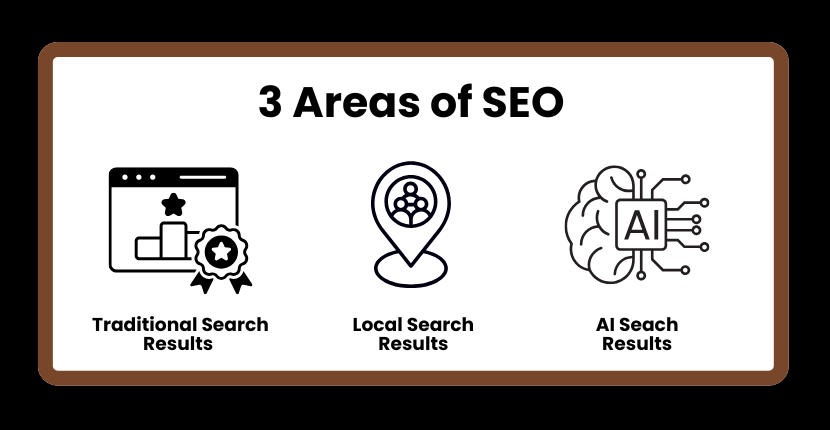
In 2026, SEO for contractors covers three areas of SEO:
- Traditional SEO — ranking in Google’s organic blue link results
- Local SEO — showing up in Google Maps and the local “3-pack”
- AI SEO (GEO) — appearing in answers from ChatGPT, Claude, Gemini, and Google’s AI Overviews
If you want a steady pipeline of inbound leads, you need visibility across all three. Our SEO services are built specifically for contractors who want to grow.
Why SEO Matters for Contractors
Homeowners don’t open the Yellow Pages anymore. They pull out their phone and search Google or ChatGPT — often while standing in a flooded basement or staring at a damaged roof.
According to Moz, over 90% of online experiences start with a search engine. And HubSpot reports that 60% of mobile users contact a business directly from search results.
Here’s what that means for your contracting business:
- The homeowner who finds you on Google or ChatGPT is already looking to hire someone
- They have high purchase intent — they’re not just browsing
- If you’re not on page one, they’re hiring your competitor
SEO leads are also higher quality than most other marketing channels. Unlike a cold ad impression, someone who searched for “emergency plumber in Mechanicsburg PA” and clicked your website is ready to take action.
SEO vs. Paid Ads for Contractors
Both SEO and PPC (pay-per-click) advertising generate leads, but they work differently.
Paid ads deliver leads immediately but stop the moment you stop paying. SEO takes more time to build, but the results compound. A page that ranks on Google today can continue generating leads for years without ongoing spend.
At Four Arrows Marketing, we recommend a combination of both — especially early on. But for long-term, sustainable growth, SEO is the foundation.
SEO by the Numbers: Stats Every Contractor Should Know
Before diving into strategy, here’s why this investment is worth your attention:
- Over 90% of online experiences begin with a search engine (Moz)
- 46% of all Google searches have local intent (Search Engine Journal)
- The first position on Google earns a click-through rate of over 34% on desktop
- SEO leads convert at about 15%, compared to just 1.7% for outbound marketing like direct mail (HubSpot)
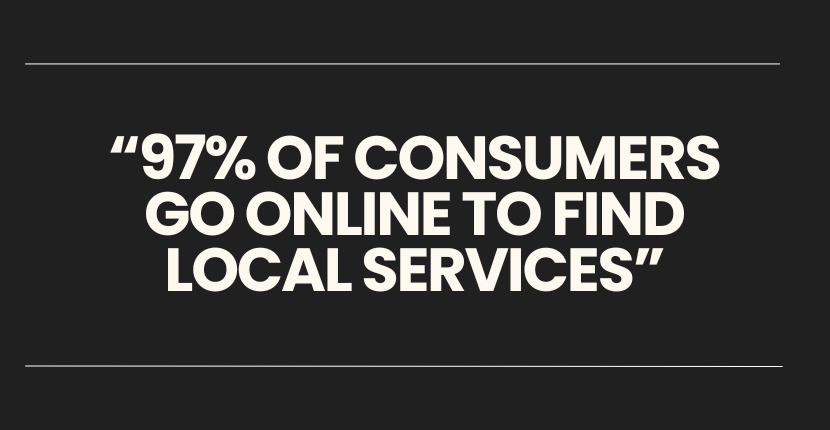
- 97% of consumers go online to find local services
- 87% of consumers start their buying journey online
For contractors doing $500K to $5M in annual revenue, even a small improvement in search visibility can mean tens of thousands of dollars in new project revenue.
The 3 Types of SEO for Contractors
1. Traditional SEO for Contractors
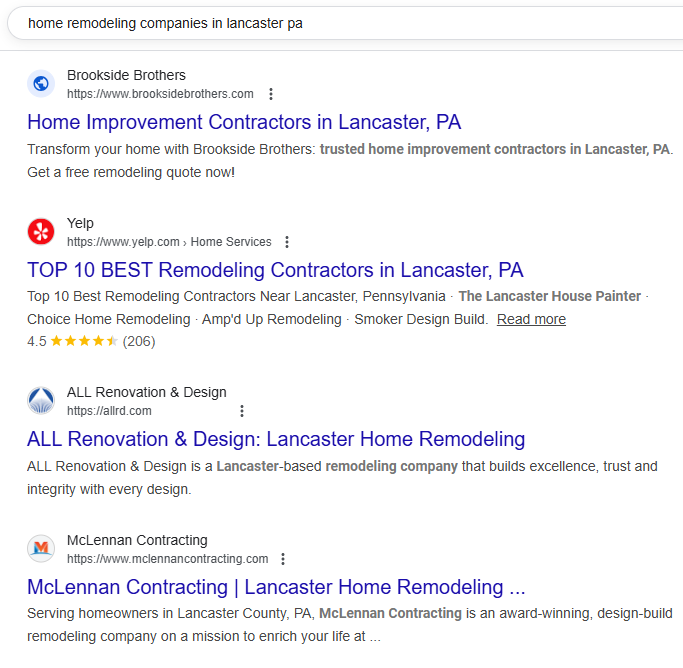
Traditional SEO focuses on ranking in Google’s organic search results — the blue clickable links below any ads or map results.
This type of SEO is driven by content, technical website health, and backlinks. It rewards contractors who publish helpful, well-structured content that demonstrates expertise.
Key components of traditional SEO include:
- Keyword research — understanding exactly what your customers are typing into Google
- On-page optimization — properly structuring your pages with the right title tags, headings, and content
- Content marketing — publishing blog posts, guides, and service pages that match what searchers are looking for
- Backlinks — earning links from reputable websites that signal trust to Google
- Technical SEO — making sure Google can crawl, index, and understand your website
Tools like Ahrefs and SEMrush are useful for identifying keyword opportunities and tracking rankings over time.
2. Local SEO for Contractors
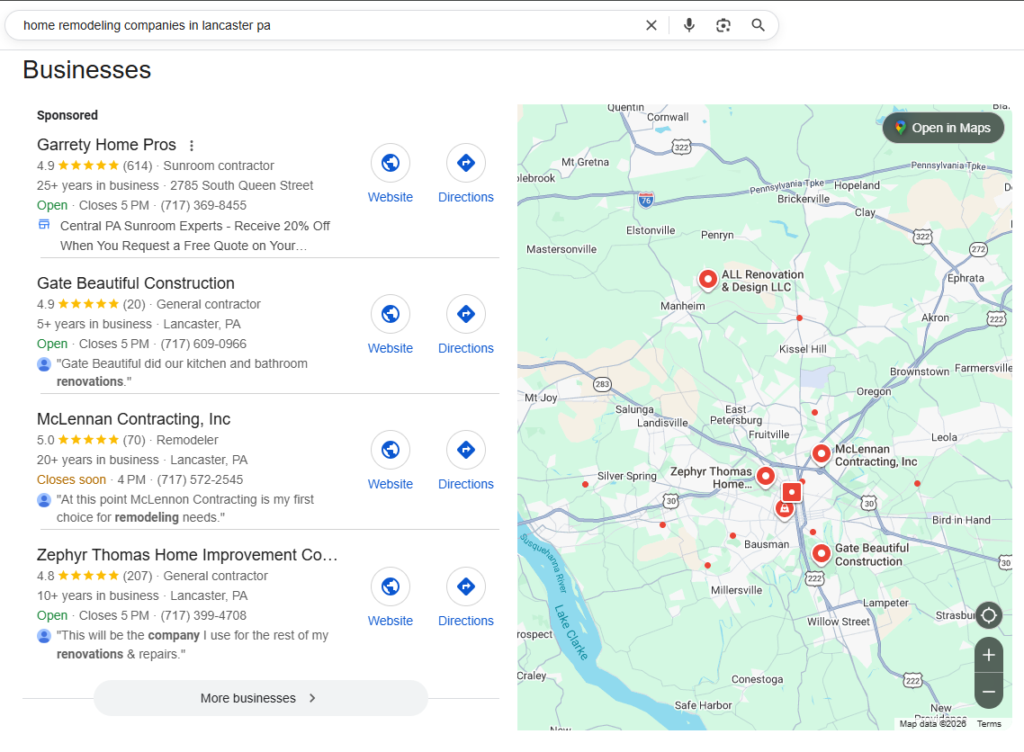
Local SEO is arguably the most important type of SEO for contractors. It determines whether your business appears in the Google Map Pack — the three business listings that show up at the top of local search results with a map.
Most homeowners searching for contractors are looking for someone nearby. They want a contractor who knows the area, can respond quickly, and is easy to reach.
Local SEO helps you show up for searches like:
- “Electrician in York PA”
- “Roofing company near me”
- “HVAC repair Harrisburg”
- “Plumber Mechanicsburg PA”
We go deep on this topic in our Local SEO for Contractors guide if you want to dive further.
3. AI SEO (Generative Engine Optimization) for Contractors
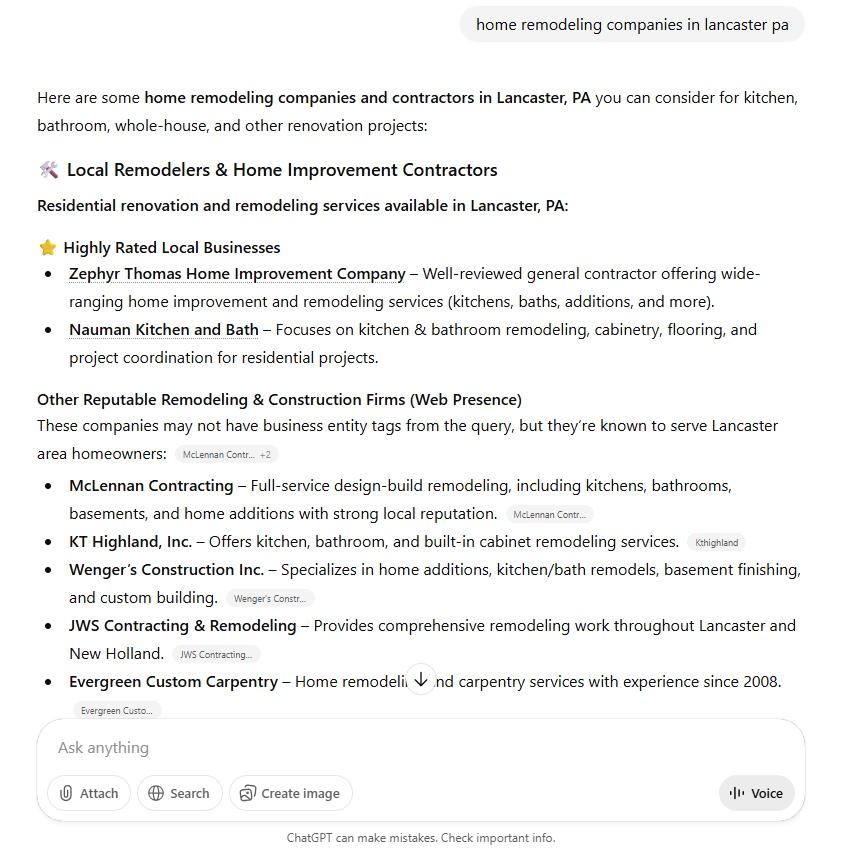
This is the newest frontier in contractor SEO. More homeowners are now using AI tools like ChatGPT, Claude, and Google’s AI Overviews to find and vet contractors before ever visiting a website.
Generative Engine Optimization (GEO) involves structuring your content and online presence so AI systems cite and recommend your business.
Key strategies for AI SEO include:
- Implementing structured data (schema markup) on your website
- Writing comprehensive FAQ content in a conversational tone
- Maintaining consistent business information across the web
- Building authority through reviews, backlinks, and brand mentions
- Including “Key Points” or summary sections at the top of content
We cover this in detail in our AI SEO for Contractors guide.
Google Business Profile: Your Single Biggest Local SEO Opportunity
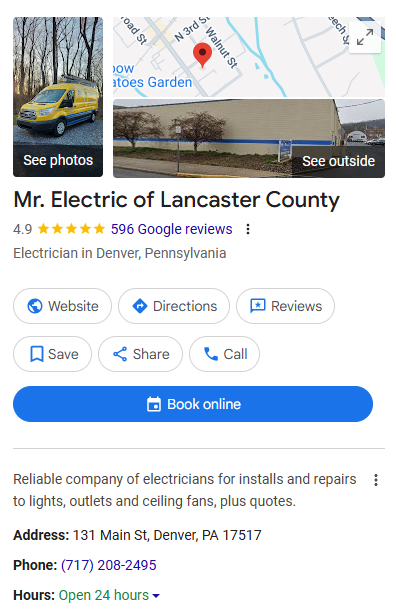
If you do nothing else from this guide, optimize your Google Business Profile (GBP). It is the most direct path to showing up in local search results and Google Maps.
Your GBP is essentially your business listing on Google. When someone searches for a contractor in your area, Google uses your GBP data to decide whether to show your business in the local map pack.
How to Optimize Your Google Business Profile
Step 1: Claim and verify your profile Go to Google Business Profile and either claim your existing listing or create a new one. Google will send a verification code to your business address or phone.
Step 2: Fill out every field completely Don’t leave anything blank. Include your business name, address, phone number, website, hours of operation, service areas, and a keyword-rich business description.
Step 3: Select the right categories Choose a primary category that reflects your core service (e.g., “Roofing Contractor” or “Electrician”). Add relevant secondary categories to expand your reach.
Step 4: Upload high-quality photos Share real photos of completed projects, your team, your vehicles, and your equipment. Businesses with photos receive significantly more direction requests and website visits than those without.
Step 5: Collect and respond to reviews Reviews are one of the strongest local ranking signals Google uses. Ask every satisfied customer to leave a review. Respond to every review — positive and negative — professionally and promptly.
Step 6: Post regular updates Use the GBP posts feature to share project completions, seasonal promotions, and company news. This signals to Google that your business is active.
Step 7: Add your services List every service you offer with descriptions and pricing where applicable. This helps Google match your profile to relevant searches.
NAP Consistency: The Foundation of Local SEO
NAP stands for Name, Address, and Phone number. It sounds simple, but NAP consistency is one of the most commonly overlooked local SEO factors for contractors.
Google cross-references your business information across dozens of online directories — Yelp, HomeAdvisor, the Better Business Bureau, Angi, and many more. If your name, address, or phone number is listed differently across these sites, Google loses confidence in your business information.
That confusion directly hurts your local rankings.
What NAP Consistency Looks Like in Practice
Every place your business is listed online should have the exact same information:
- Business Name: Four Arrows Marketing (not “Four Arrows Mktg” or “Four Arrows Marketing LLC” in one place and “Four Arrows Marketing” in another)
- Address: Same format everywhere — abbreviate or spell out consistently (e.g., “St.” vs. “Street”)
- Phone Number: Same number, same format (e.g., “(717) 555-1234” vs. “717-555-1234”)
Audit your listings across major directories. Fix any inconsistencies you find before doing anything else in local SEO.
Key Directories to Claim for Contractors
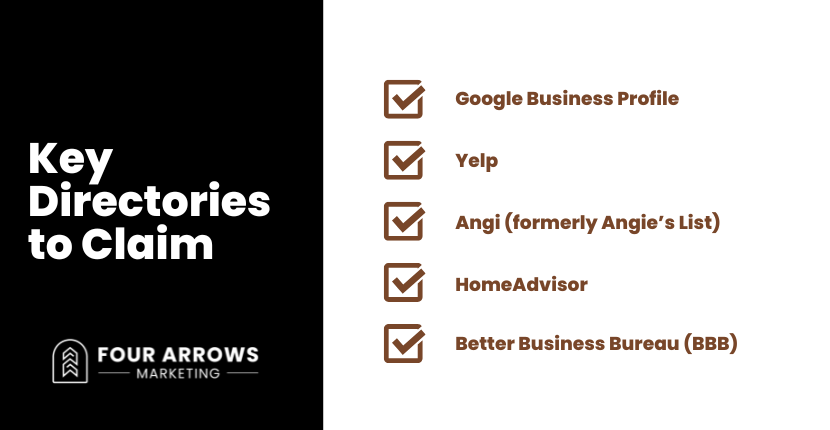
Think of online directories the way you think about word-of-mouth referrals. When multiple trusted sources say the same thing about your business, people (and Google) believe it. Each directory listing is essentially another vote of confidence that confirms your business is real, established, and located where you say it is.
The goal isn’t to be listed on every directory on the internet. Focus on the ones that carry the most weight with Google and the ones homeowners actually use when researching contractors. Start with these and make sure every single one matches your GBP exactly before moving on.
- Google Business Profile
- Yelp
- Angi (formerly Angie’s List)
- HomeAdvisor
- Better Business Bureau (BBB)
- And More (Houzz, Nextdoor, Facebook Business Page, Apple Maps)
Consistent listings across these platforms strengthen your local authority and improve your chances of ranking in the map pack.
Keyword Research for Contractors
Keyword research is the process of identifying exactly what your potential customers type into Google when looking for services like yours.
Most contractors assume they know what people are searching. Often, they’re wrong — or they’re only targeting the most competitive, hard-to-rank terms while missing easier opportunities.
Types of Keywords Contractors Should Target
Service keywords: These describe what you do.
- “Roof replacement”
- “HVAC installation”
- “Bathroom remodel”
- “Electrical panel upgrade”
Location keywords: These combine your service with a specific city or area.
- “Roofer in Lancaster PA”
- “Plumber Mechanicsburg PA”
- “HVAC repair York PA”
- “Electrician near Harrisburg”
Intent keywords: These signal what the searcher is ready to do.
- “Emergency plumber near me” (ready to hire now)
- “How much does a roof replacement cost” (researching, not quite ready)
- “Best roofing contractor reviews” (comparing options)
Long-tail keywords: Longer, more specific phrases that are easier to rank for and often convert better.
- “Licensed electrician for panel replacement in Carlisle PA”
- “Commercial HVAC maintenance contract Harrisburg”
Tools like Ahrefs and SEMrush help you find these opportunities, see monthly search volume, and understand how competitive each keyword is.
You can also look at Google’s “People Also Ask” and autocomplete suggestions — free research that shows exactly what your customers are searching.
On-Page SEO for Contractor Websites
Once you know your keywords, you need to optimize your website pages to match them. This is called on-page SEO.
Every important page on your contractor website should be built around a specific keyword or topic.
Elements to Optimize on Every Page
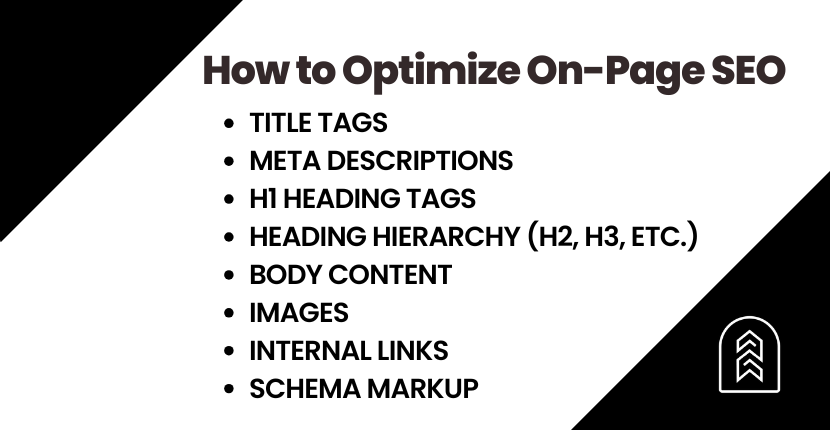
Title Tag: This is the clickable headline that appears in Google search results. It should include your target keyword and location. Example: “Roofing Contractor in Harrisburg, PA | Company Name”
Meta Description: The short description below the title tag in search results. It doesn’t directly affect rankings but influences whether someone clicks. Write it like an ad — include your keyword and a clear reason to click.
H1 Heading: Every page should have one H1 that includes your target keyword naturally.
Headings (H2, H3): Use these to structure your content and naturally include related keywords.
Body Content: Write clear, helpful content that answers what the searcher is looking for. Include your keyword naturally — don’t force it.
Images: Add alt text descriptions to every image. This helps Google understand what the image shows and improves accessibility.
Internal Links: Link to your other service pages, location pages, and blog posts. This helps Google understand your site structure and distributes authority across your pages.
Schema Markup: Add local business schema to help Google and AI systems understand your business name, address, phone number, hours, and services.
Service Pages and Location Pages for Contractors
One of the highest-impact SEO strategies for contractors is building a complete library of service pages and location pages.
Service Pages
Each service you offer should have its own dedicated page. Don’t list all your services on one page.
If you’re a home remodeling contractor, you might have separate pages for:
- Bathroom remodeling
- Kitchen remodeling
- Basement finishing
- Home additions
- Deck building
Each page targets a specific keyword and gives Google a clear signal about what service you offer. This is how home remodeling contractors, HVAC companies, plumbers, and electricians compete for dozens of high-value keywords simultaneously.
Location Pages
Location pages work the same way but for geography. If you serve multiple cities, create a dedicated page for each one.
A roofing company serving Central PA might build pages for Harrisburg, Mechanicsburg, York, Lancaster, Carlisle, and Hershey — each targeting “roofing contractor + [city name].”
These pages are especially powerful for contractors serving a regional market. At Four Arrows Marketing, we build customized location page strategies that match how customers search in each market.
Content Marketing for Contractors
Beyond service and location pages, publishing regular blog content helps contractors rank for informational keywords and build trust with potential customers before they’re ready to hire.
Think about the questions your customers ask before they pick up the phone:
- “How much does a new roof cost?”
- “What are signs I need my HVAC replaced?”
- “Do I need a permit for a bathroom remodel?”
- “How long does a kitchen renovation take?”
If your website answers these questions, Google sends those searchers your way. You build trust before the first phone call. And when they’re ready to hire, they already feel like they know you.
According to Backlinko, comprehensive content that thoroughly covers a topic tends to outrank thin content for competitive keywords.
Consistent publishing also signals to Google that your site is active and authoritative — which benefits all your pages, not just the blog posts themselves.
Building Backlinks for Contractor Websites
A backlink is a link from another website pointing to yours. Google treats backlinks like votes of confidence — when reputable websites link to you, it signals that your business is trustworthy and authoritative.
Backlinks are one of Google’s strongest ranking signals, especially for competitive contractor keywords.
How Contractors Can Earn Backlinks
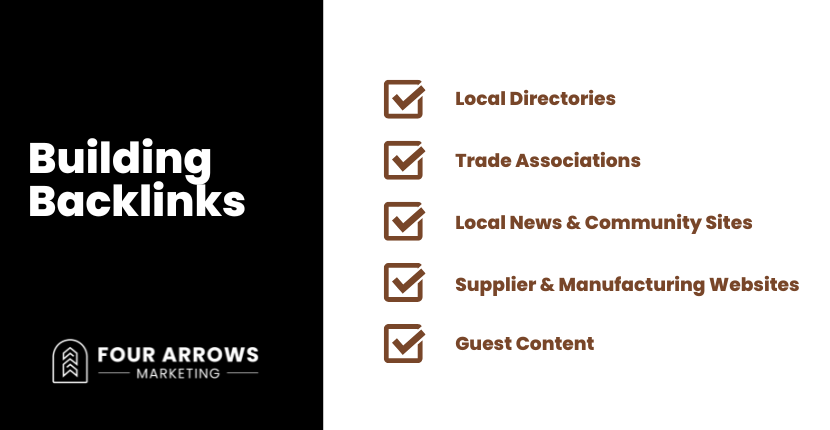
- Local directories: Claim listings on Yelp, HomeAdvisor, Angi, the BBB, and industry-specific directories. Many of these provide a backlink to your website.
- Trade associations: Join organizations like PHCC or ACCA and get listed in their member directories.
- Local news and community sites: Sponsor a local event, donate to a community cause, or get featured in a local business spotlight. These often result in links from local news sites.
- Supplier and manufacturer websites: If you’re a certified installer for a specific brand, many manufacturers list certified contractors on their websites with a link.
- Guest content: Contribute an article to a local business publication or industry blog.
Quality matters more than quantity. One link from a respected local news site is worth more than fifty links from low-quality directories.
Technical SEO for Contractors
Technical SEO makes sure Google can properly crawl, index, and understand your website. Even great content won’t rank if your site has technical problems holding it back.
Technical SEO Checklist for Contractor Websites
- Mobile-friendly design: Your site must work perfectly on smartphones. Most contractor searches happen on mobile. Google also uses your mobile version to determine rankings.
- Page speed: Slow sites frustrate users and hurt rankings. Compress images, use a fast hosting provider, and minimize unnecessary code.
- SSL certificate: Your site should start with “https://” — not “http://”. An SSL certificate tells Google and visitors your site is secure.
- Crawlable structure: Make sure Google can find and access all your important pages. Avoid burying content behind forms or login walls.
- XML sitemap: Submit a sitemap to Google Search Console so Google knows all the pages on your site.
- Fix broken links: Broken links (404 errors) hurt user experience and can waste Google’s crawl budget.
- Schema markup: Add structured data to help Google and AI systems understand your business information, services, and reviews.
Tools like Screaming Frog are great for running a technical audit of your contractor website and finding issues to fix.
The Complete SEO Checklist for Contractors in 2026
Use this as your roadmap. Work through it section by section.
Google Business Profile
- Claimed and verified
- Business name, address, and phone number are accurate
- Service areas are defined
- Correct primary and secondary categories selected
- Business description written with relevant keywords
- Photos uploaded (team, projects, vehicles)
- Services listed with descriptions
- Reviews being actively requested and responded to
- Regular GBP posts published
NAP Consistency
- Business name matches exactly across all platforms
- Address format is consistent everywhere
- Phone number format is consistent everywhere
- Major directories claimed: Google, Yelp, Angi, HomeAdvisor, BBB, Houzz, Nextdoor, Facebook
On-Page SEO
- Title tags include target keyword and location
- Meta descriptions are written for every page
- Each page has one H1 with the target keyword
- Proper H2/H3 heading hierarchy used throughout
- Content thoroughly covers the topic
- Images have descriptive alt text
- Internal links connect related pages
- Schema markup implemented for local business
Service and Location Pages
- Separate page exists for each core service
- Separate page exists for each city or region served
- Each page targets a specific keyword
- Each page has unique, helpful content (not copy-pasted)
Content Marketing
- Blog publishing schedule established
- Content addresses common customer questions
- Posts target informational keywords
- Content links to relevant service and location pages
Backlinks
- All major directories claimed
- Trade association memberships leveraged
- Local community involvement generating links
- Manufacturer/supplier partnerships explored
Technical SEO
- Site is mobile-friendly
- Pages load in under 3 seconds
- SSL certificate active (https://)
- XML sitemap submitted to Google Search Console
- No broken links or crawl errors
- Schema markup implemented
Contractor SEO FAQ
How long does SEO take to work for contractors?
Most contractors begin seeing meaningful improvements within 3 to 6 months of consistent effort. More competitive markets may take 6 to 12 months to see significant results.
SEO is a long-term investment. The contractors who commit to it consistently are the ones who dominate their local markets — and keep those positions for years.
What is the most important SEO strategy for contractors?
For most contractors, optimizing your Google Business Profile delivers the fastest and most impactful results.
Beyond that, NAP consistency across directories, dedicated service pages with local keywords, and regular review generation are the highest-ROI activities for contractors just getting started with SEO.
How do I get my contracting business to show up on Google Maps?
Showing up in Google Maps requires a verified and optimized Google Business Profile.
Claim your profile, fill out every field completely, upload photos of your work, select accurate service categories, and actively collect reviews from customers. Consistent NAP information across the web and local backlinks will strengthen your map pack rankings over time.
What keywords should contractors focus on for SEO?
Start with keywords that combine your primary service with your most important service area. For example: “roofing contractor Harrisburg PA” or “plumber Mechanicsburg PA.”
Then expand to surrounding cities, secondary services, and informational keywords your customers search while researching. Tools like Ahrefs and SEMrush can identify the best opportunities specific to your market.
How much does contractor SEO cost?
Professional SEO for contractors typically ranges from $1,500 to $5,000 per month depending on market competitiveness, the number of services and locations targeted, and the scope of work involved.
The more important question is what the return on that investment looks like. If a single new roofing job generates $10,000 to $15,000 in revenue, it doesn’t take many leads to justify the cost of SEO.
At Four Arrows Marketing, we aim to generate at least $3 in revenue for every $1 our clients invest in digital marketing.
Do contractors need a blog for SEO?
A blog isn’t strictly required, but it is one of the best ways to build authority, rank for informational keywords, and attract potential customers earlier in the research phase.
Contractors who publish helpful content consistently tend to outrank those who don’t — especially in competitive markets. It also gives you content to share on social media and in emails to past customers.
What types of contractors benefit most from SEO?
SEO works for virtually every type of contractor. We work with electricians, HVAC contractors, plumbers, roofers, flooring companies, landscapers, home remodelers, tree service companies, and more.
Any contractor who serves a defined geographic area and wants a consistent flow of inbound leads can benefit from SEO.
Ready to Grow Your Contracting Business with SEO?
You deserve to work with a digital marketing agency that values you and gets you a return on your investment.
At Four Arrows Marketing, we specialize in helping contractors grow their businesses through SEO and PPC that actually moves the needle. As the top digital marketing agency for contractors, we understand your industry, your customers, and what it takes to compete online.
Adam Gante, founder of Four Arrows Marketing, has nearly a decade of experience in SEO. He built this agency specifically to serve contractors who are tired of working with agencies that don’t communicate, don’t deliver results, and don’t understand the trades.
We’re built on relationships and results:
- Monthly strategy calls so you always know what’s happening
- Weekly updates so you’re never left in the dark
- Monthly performance reports covering revenue, leads, cost per lead, traffic, and rankings
- A goal of generating at least $3 for every $1 you invest
Whether you’re new to digital marketing or frustrated with an agency that isn’t delivering, we’d love to show you what contractor SEO looks like when it’s done right.
Schedule a call with Four Arrows Marketing and let’s talk about what growth looks like for your business.
–
Written by Adam Gante, Founder of Four Arrows Marketing. Last updated January 2026.
–
Further Reading