
Key Points: When a homeowner has a plumbing problem, they are not browsing options, they are searching for a solution right now. Google Ads puts your plumbing company in front of that homeowner at the exact moment they are ready to call. A well-run campaign means a steadier schedule, more predictable revenue, and less reliance on word of mouth to keep your crew working.
Plumbing Leads Start on Google
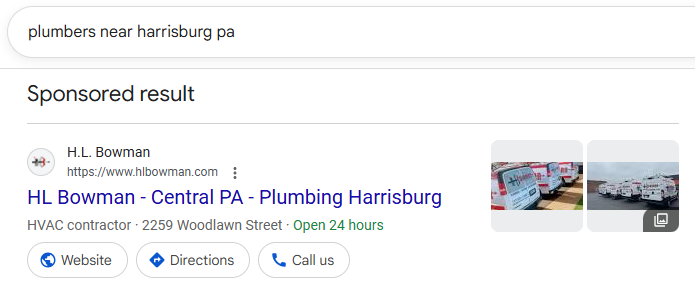
Nobody wakes up planning to call a plumber. Something breaks, floods, or backs up, and the first thing a homeowner reaches for is their phone. That search happens fast, the decision happens fast, and the plumber at the top of the results usually gets the call.
This is what makes Pay-Per-Click advertising such a natural fit for plumbing companies. You are not trying to convince someone they need your service. They already know they need it. They are looking for someone to trust right now, and Google Ads lets you be that company.
The plumbing industry in the United States brings in over $130 billion annually, with residential service calls making up a large portion of that revenue. A meaningful share of those jobs begin with a local Google search. If a competitor’s name is showing up and yours is not, they are collecting calls that could have gone to you.
PPC works differently from most marketing channels because you are reaching people with active intent. Someone searching “water heater not working Mechanicsburg” is not casually browsing. They are in the middle of a problem and ready to hire. That is about as qualified as a lead gets.
Why So Many Plumbers Have a Bad Experience With Google Ads
The contractors we talk to who have tried Google Ads and given up almost never had a problem with the platform itself. The problem was how the campaign was set up and managed.
Running a profitable plumbing campaign takes more than creating an account and adding a few keywords. You need the right match types so your ads show for relevant searches but not irrelevant ones. You need geographic targeting that matches your actual service area, not a radius that pulls in calls from towns you do not serve. You need landing pages that convert visitors into phone calls, and you need call tracking so you know which ads are actually driving booked jobs.
Miss any one of those pieces and you end up paying for clicks that go nowhere. Homeowners who want to fix it themselves, people searching for plumbing parts, job seekers looking for employment, and searchers well outside your service area can eat through a monthly budget in a hurry if the campaign is not dialed in from the start.
A lot of plumbing companies have also had the experience of working with a digital marketing agency that handles every kind of business under the sun. Those agencies tend to apply generic paid search frameworks to plumbing accounts and spend the first few months figuring out how the industry actually works. At Four Arrows Marketing, we work exclusively with contractors, so we are not learning on your budget.
PPC and SEO Are Not Competing With Each Other
One of the most common questions plumbing business owners ask when they start looking at digital marketing is whether to do paid ads or SEO. It is actually the wrong question, because the two strategies do different jobs.
Google Ads generates leads from the day a campaign launches. SEO for plumbing contractors builds organic visibility over time, typically over a span of several months before rankings start moving in a meaningful way. Once that organic presence is established, those leads cost you nothing per click.
The businesses that grow fastest run both at the same time. Paid search keeps the phone ringing while SEO builds in the background. As your organic rankings improve for certain services or locations, you can reduce ad spend in those areas and redirect the budget toward markets where you are still working on visibility. One strategy funds the other over time.
Relying entirely on paid search is also a fragile position. The moment you cut the budget or pause the account, the leads stop. SEO gives your business staying power that does not disappear the second you stop spending. Learn more about how both strategies work together on our PPC services page.
The Types of Google Ads That Work for Plumbing Companies
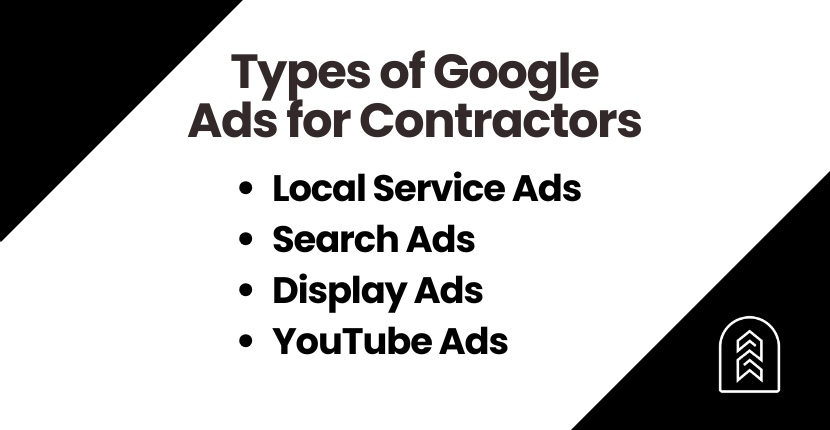
Local Services Ads
If you have not set these up yet, this is where to start. Local Services Ads appear above everything else on the search results page, including traditional paid ads and organic listings. They include your business name, rating, and a “Google Guaranteed” badge that signals to homeowners that your company has been vetted.
Unlike standard PPC, you pay per lead rather than per click. The Google Guaranteed verification process requires a background check and license verification, which weeds out less credible operators and gives your business an immediate trust advantage. For a trade where you are sending someone into a homeowner’s house, that badge matters more than most people realize.
Search Ads
Traditional Search Ads are the text-based listings that show up when someone types a query into Google. For plumbing, these are the bread and butter of a paid search strategy because the searches that trigger them tend to be high intent and time-sensitive.
The key to making Search Ads work is alignment. The keyword someone searched, the ad they see, and the page they land on all need to point to the same thing. A homeowner who searched for “sump pump repair” and clicks your ad should not arrive at a page about your full range of plumbing services. They should land on a page dedicated to sump pump repair with a phone number front and center and a reason to call you specifically.
Display Ads for Remarketing
Most homeowners doing research on a larger plumbing project, think water heater replacement, water softener installation, or bathroom remodel rough-in work, will visit more than one website before they pick up the phone. Display Ads let you stay in front of those visitors as they continue browsing the web in the days after they leave your site.
This type of advertising is less effective for emergency calls, where decisions happen immediately, and more effective for planned projects where the homeowner is still in the consideration phase. The Water Quality Association reports that homeowner interest in water treatment and softener systems has grown steadily in recent years, making this a worthwhile segment for remarketing campaigns.
YouTube Ads
Short video content builds credibility in a way that text alone cannot. A two-minute walkthrough of what a water line inspection involves, or a quick explanation of the difference between tankless and traditional water heaters, can move a homeowner from uncertain to confident about calling you.
YouTube Ads work best as a brand awareness play rather than a direct response channel. They pair well with a remarketing setup so you can follow up with homeowners who have already shown interest in your services.
What Happens During the First Three Months
A lot of plumbing companies abandon Google Ads campaigns too early because performance in the first few weeks does not match their expectations. Understanding what the early stages actually look like makes it easier to stay the course through the period where the real optimization happens.
The first two weeks are largely about data collection. Google is learning which types of users click your ads, how they behave after clicking, and which searches are driving conversions. This is not the time to make large changes to the campaign. Doing so resets the learning process and extends the time before you see reliable performance.
Between weeks three and six, patterns start to emerge. Your search term report will show exactly what people typed before clicking your ad. For most plumbing accounts, this is also when you find a batch of searches that have nothing to do with hiring a plumber. DIY how-to queries, supply wholesalers, plumbing school searches, and searches from other trades often show up here. Blocking those terms through negative keywords stops wasted spend immediately.
By months two and three, you have real data to work with. You can see which keywords are generating calls, which ads are getting ignored, and which landing pages are converting. This is where experienced campaign management makes a real difference. The plumbing companies that commit to this window and work with someone who knows how to act on the data are the ones that see cost per lead come down and call volume go up.
5 Things That Separate Profitable Plumbing Campaigns From Ones That Break Even
1. Know What a Job Is Worth Before You Set a Budget
Your average job value determines what you can afford to pay for a lead. A drain cleaning call and a whole-house repiping project are not the same conversation. Think through your full service mix and calculate a realistic average. Then work backwards: if you need a certain number of jobs per month and you close roughly one in three leads, you know how many leads you need and what you can pay for each one. Let that math set the budget.
2. Build Your Negative Keyword List Before You Launch
Every dollar spent on an irrelevant click is a dollar that cannot go toward a real customer. Before your first ad goes live, load up your negative keyword list with terms that attract the wrong traffic. Searches involving “how to,” “DIY,” “parts,” “license,” “school,” “jobs,” and “free” should all be on that list from day one. Review your search terms weekly for the first couple of months. You will keep finding new ones.
3. Create Dedicated Landing Pages for Each Service
The homepage is not a landing page. A homeowner who clicked an ad for “emergency plumber York PA” needs to arrive somewhere that immediately confirms you handle emergencies in York, shows them your phone number, and gives them a reason to call you instead of going back to the search results. Every core service you advertise deserves its own page built specifically for that ad. This one change has a bigger impact on conversion rates than almost anything else.
4. Set Up Call Tracking Before the Campaign Launches
Without call tracking, you are guessing. You might know calls are coming in, but you will not know whether they came from your ad for drain cleaning or your ad for water heater service. Tools like CallRail use dynamic number insertion to attribute every inbound call back to the specific keyword and ad that drove it. That data feeds directly back into Google Ads as a conversion signal, which helps the algorithm get smarter about who to show your ads to.
5. Adjust Bids Around the Times Plumbing Emergencies Actually Happen
Emergency plumbing calls do not follow business hours. Weekend mornings, holiday evenings, and overnight hours are when homeowners discover a burst pipe or a backed-up sewer line. If you offer emergency service, your campaign should be bidding more aggressively during those windows. According to the Plumbing-Heating-Cooling Contractors Association, emergency and urgent repair calls represent a disproportionate share of annual plumbing revenue. Make sure your ads are visible when that demand spikes.
Plumbing PPC Checklist
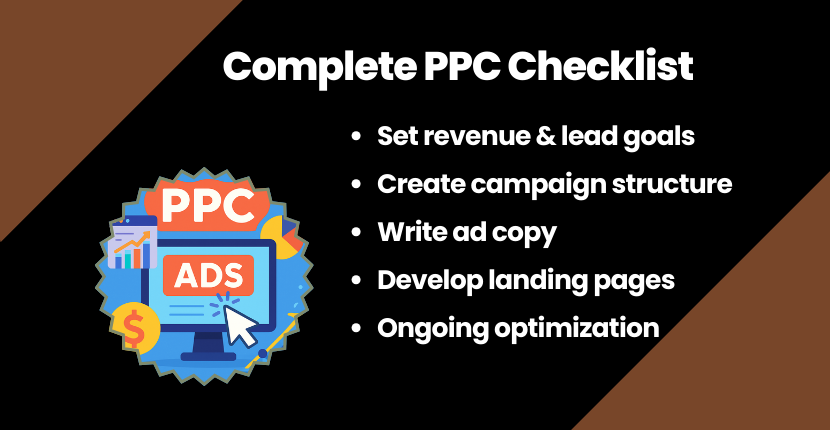
Before Launch:
- Average job value calculated and budget built around real business goals
- Negative keyword list loaded before first dollar is spent
- Call tracking configured and tested across all ads
- Dedicated landing page created for each advertised service
- Conversion tracking connected to Google Ads
- Local Services Ads live with Google Guaranteed verification complete
Campaign Structure:
- Separate campaigns for emergency calls, scheduled repairs, and installation projects
- Ad groups organized by service type and city or service area
- Geographic targeting matched to your actual coverage area
- Ad scheduling active with bid increases during evenings and weekends for emergency campaigns
Ad Copy and Landing Pages:
- Headlines speak to the homeowner’s specific problem
- Service area and city referenced in ad copy where possible
- Call extensions and location extensions enabled
- Click-to-call button visible above the scroll on mobile
- Page load time under two seconds
- Real customer reviews visible on the landing page
Ongoing Management:
- Search term report reviewed weekly
- New negative keywords added regularly
- Bid adjustments reviewed for peak performance windows
- Monthly reporting on cost per lead, call volume, and booked jobs
FAQ: PPC for Plumbing Companies
How much should a plumbing company budget for Google Ads?
In a mid-sized market like Central PA, most plumbing companies find that $1,500 to $2,500 per month generates a steady flow of leads. Larger or more competitive markets may require $3,500 to $6,000 per month for strong visibility. The right number for your business depends on your service area, average job value, and how many leads you need each month to hit your revenue goals. Start with enough budget to collect real data, then scale based on results.
Should I advertise drain cleaning and water heater services in separate campaigns?
Yes, and the reason is practical. Drain cleaning calls tend to be lower ticket, higher volume, and driven by a different type of search than water heater replacement jobs. Keeping them in separate campaigns lets you set different bids, write different ad copy, and send each visitor to a page built for that specific service. It also makes reporting cleaner. When everything is mixed together, it is hard to tell which services are profitable and which are draining budget.
How do I compete with large plumbing chains that have bigger ad budgets?
Bigger budgets do not automatically mean better results. Large chains often run generic campaigns with broad targeting and little local relevance. A smaller plumbing company can compete effectively by going more specific: tighter geographic targeting, more precise keywords, landing pages that speak to specific neighborhoods or cities, and ad copy that highlights what the big operators cannot offer, like talking directly to the owner or faster local response times. Your Google Guaranteed badge and genuine local reviews also carry real weight with homeowners who are skeptical of corporate plumbing companies.
What is a realistic cost per lead for a plumbing Google Ads campaign?
Cost per lead varies depending on your market, the services you are advertising, and how well the campaign is built. In Central PA, plumbing companies typically see cost per lead land somewhere between $60 and $120 for standard service calls. Emergency searches and high-value jobs like water heater replacements or repiping projects can cost more per lead but often justify the higher spend because the average job value is significantly larger. The goal is not the lowest cost per lead. It is the best return on what you spend.
Is it worth running Google Ads year-round, or should I pause during slower months?
Running a reduced budget during slower periods is almost always better than pausing entirely. Stopping the campaign clears the account history Google uses to target your ads effectively. When you restart, you are essentially starting over. A smaller always-on budget keeps the account active, maintains your Quality Score, and captures the jobs that come in regardless of season, like water heater failures, which happen year-round and consistently generate higher-value calls.
Ready to Fill Your Schedule?

Inconsistent lead flow is one of the biggest obstacles to growing a plumbing business. It makes hiring decisions harder, complicates planning, and creates a cycle where you are either slammed or slow with not much in between. A well-run Google Ads campaign brings a more predictable stream of qualified calls so you can build the kind of operation that actually scales.
Four Arrows Marketing manages PPC campaigns for plumbing companies and contractors across Central PA. Every client gets monthly strategy calls, weekly updates, and straightforward reporting that shows exactly what the campaign is generating.
Schedule a call today to talk through what a paid search strategy built specifically for your plumbing company could look like.
–
Written by Adam Gante, Founder of Four Arrows Marketing. Last updated May 2026.
–