
Key Points: Electrical problems do not sit on a to-do list for long. A breaker that keeps tripping, a panel that smells like it is burning, or outlets that stopped working in half the house all have one thing in common: the homeowner wants it fixed today. When they head to Google to find someone, the electricians showing up at the top of the page collect the calls. Google Ads is how you make sure that company is yours, and the result is a lead flow you can actually count on instead of hoping referrals keep trickling in.
Electrical Work and Google Ads: Why the Two Go Together
Homeowners do not stumble across an electrician the way they might discover a new restaurant. There is always a reason behind the search. A home inspector flagged aluminum wiring before closing. The main panel is a 1970s Federal Pacific that every electrician and insurance company flags as a liability. A new EV just landed in the driveway and the garage needs a Level 2 charger before the weekend. These are not casual browsing moments. They are problems with deadlines attached.
The National Electrical Contractors Association reports that residential electrical spending has grown steadily alongside the surge in home renovations, EV adoption, and solar installations. Central PA is seeing that firsthand. Older housing stock in Harrisburg, York, and Lancaster regularly needs panel replacements and rewiring. New developments around Mechanicsburg and Hershey need electrical work from the ground up. These homeowners are searching for help right now, and the electrician visible at the top of those results gets the call.
Our PPC services page covers how we build and manage paid search campaigns for contractors if you want the full picture before reading on.
The Real Reason Google Ads Does Not Work for Most Electrical Contractors
Ask around and you will find plenty of electricians who have tried Google Ads, spent a few hundred dollars, and walked away with nothing to show for it. That outcome is common, but it is almost never the platform’s fault.
The first issue is keyword targeting. Electrical is one of those industries where the gap between a buyer and a non-buyer is enormous in search. Someone typing “how to wire a GFCI outlet” is doing a DIY project. Someone typing “electrician near me Carlisle PA” is picking up the phone. A campaign that does not distinguish between those two audiences will burn through budget on traffic that was never going to convert. The same problem shows up with terms related to electrical apprenticeships, electrician supply companies, and trade school programs. All of them can trigger a poorly configured ad.
The second issue is the disconnect between the ad and where it sends people. When a homeowner searching for a panel upgrade lands on a homepage that talks about everything your company does, they have to do work to figure out if you are the right fit. Most of them will not bother. They will hit the back button and click the next result. Specificity wins in paid search, and most campaigns that fail do so because they treat all traffic as the same.
At Four Arrows Marketing, we work only with contractors. That focus matters because the way someone searches for an electrician is genuinely different from how they search for an accountant or a software product, and campaigns built without that context tend to underperform.
Paid Search and SEO Working at the Same Time

One question that comes up often is whether an electrical contractor should put their budget into SEO or Google Ads. The more productive conversation is about how to run both without letting either one undercut the other.
Organic SEO builds visibility that pays off for years. A strong ranking for “licensed electrician Harrisburg PA” or “generator installation York PA” drives leads without ongoing ad spend, but earning that ranking takes time. Most electrical businesses cannot wait six to twelve months for results to show up.
Paid search fills that gap immediately. A new campaign can reach the top of search results within days of launching while SEO builds in the background. The data from paid campaigns also sharpens your organic strategy. When you can see which services get searched most and which cities convert best, you stop guessing about where to focus your content efforts. Over time, as organic rankings improve for your strongest terms, you can shift ad budgets toward service areas or specialties where visibility is still limited.
Which Google Ad Formats Make Sense for Electrical Contractors
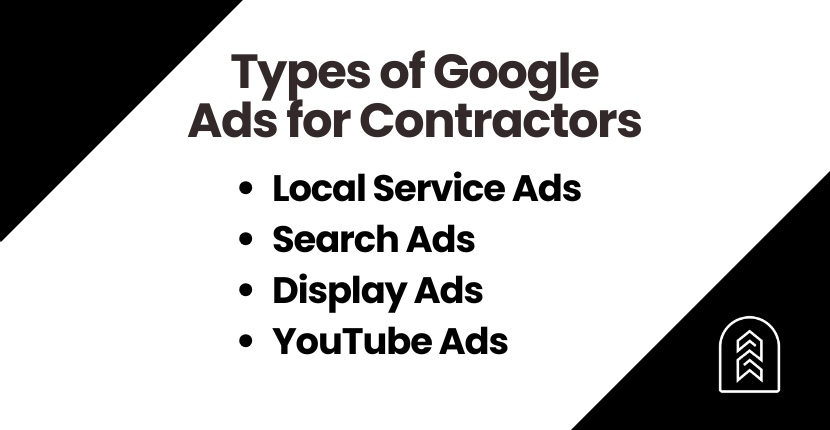
Local Services Ads
Local Services Ads sit above paid text ads, above the map pack, and above every organic result on the page. They show your business name, your star rating, and a Google Guaranteed badge that tells homeowners your company has passed background checks and licensing verification.
That badge matters more in the trades than in most other industries. Homeowners are making a decision about who they let into their house to work on something that can kill them if it goes wrong. The Google Guaranteed badge lowers that barrier in a way that ordinary ads cannot. Local Services Ads are also billed per lead rather than per click, which makes the cost math easier to justify on competitive search terms.
Search Ads
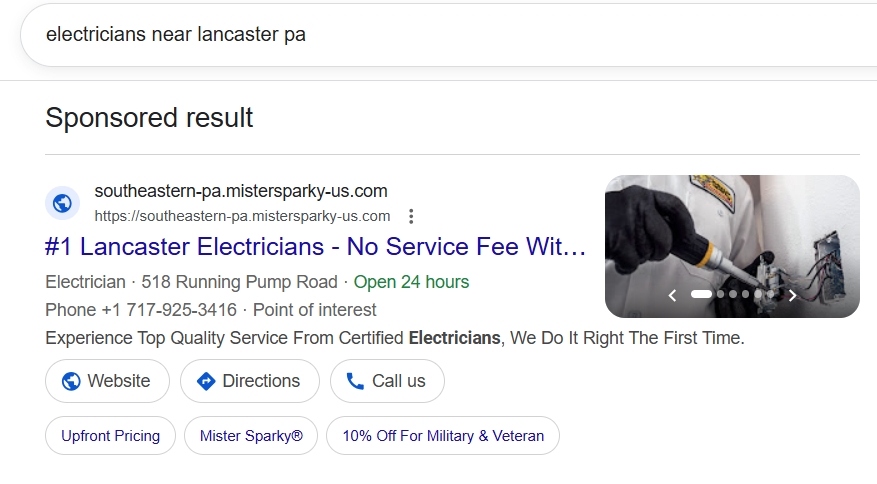
Search Ads are the text results that appear when someone types a query into Google. This is where electricians in Central PA tend to find the most valuable traffic because the searches that drive clicks are highly specific. “Electrician panel upgrade Mechanicsburg PA.” “Generator install near Hershey.” “Emergency electrician Lancaster PA tonight.” These searches come from people who have already decided to hire someone. Your ad just needs to be the one they click.
What separates campaigns that work from campaigns that waste money is how closely the ad and the landing page match the search. A homeowner looking for an EV charger installation should land on a page dedicated to that service, with relevant information, a clear call to action, and your reviews front and center. A general homepage is not going to close that gap.
Display Ads
Not every electrical project is an emergency. A homeowner deciding whether to rewire an older home, pricing out a whole-house generator, or comparing options for a panel upgrade may spend weeks researching before reaching out to anyone. Display Ads keep your business visible across the sites that homeowner visits during that window. This format works best for higher-ticket projects in the $5,000 to $15,000 range where the homeowner needs time before committing.
YouTube Ads
A short video walking a homeowner through what a panel inspection involves, or what the process looks like from the first call through permit sign-off, does something a text ad simply cannot. It makes the experience feel concrete and puts a face to your company before you ever speak to someone. YouTube Ads work best paired with a remarketing strategy targeting homeowners who visited your website but have not yet reached out.
The First 90 Days: What to Actually Expect
New campaigns need time before the data is meaningful. During the first few weeks, Google collects information about who clicks, how they behave after clicking, and which search terms are driving real engagement. Making constant changes during this window slows the process down.
Around weeks three through six, the search term report starts earning its keep. You will see every query that triggered your ads, and some will be unexpected. Terms tied to electrical apprenticeships, DIY wiring guides, and supply companies regularly show up in campaigns that are not properly filtered. Search Engine Land consistently identifies negative keyword management as one of the highest-impact improvements available in a search campaign, and electrical contracting is a category where that work pays off fast.
By the 90-day mark, the campaign has enough history to support real optimization decisions. You will know which services produce the best leads, which parts of your service area respond well, and where the gaps are.
5 Things Electrical Contractors Who Win at Google Ads Do Differently
1. They Price Out a Lead Before Setting a Budget

There is a big difference in job value between a service call and a full rewire. Before deciding what to spend each month, calculate the average revenue across all the jobs you book. That figure tells you what a qualified lead is worth to your business, which tells you what you can spend to acquire one and still come out ahead. Contractors who set budgets without this math end up either spending too little to get meaningful volume or spending without a benchmark to measure against.
2. They Filter Out Bad Traffic Before the First Ad Goes Live

Every electrical campaign should have a negative keyword list in place on launch day. Terms like “electrician apprenticeship,” “DIY wiring,” “electrical wire for sale,” “how to install an outlet,” and “electrical contractor license requirements” will all trigger ads in a campaign without proper filters. Review the search term report weekly in the early months. New irrelevant terms will keep surfacing, and catching them early protects the budget.
3. They Build Pages That Match What the Ad Promises

A homeowner who clicks an ad for EV charger installation expects to land on a page about EV charger installation. A homeowner clicking on emergency electrical service expects to see availability, response time, and service area information right away. According to Search Engine Land, landing pages built around a single service consistently outperform general pages on conversion rate. Every core service in your campaign deserves its own page with its own message.
4. They Track Phone Calls Back to the Campaign
The majority of electrical leads start with a phone call. Without call tracking, there is no way to know which ads and keywords are producing real revenue versus which ones are just eating budget. A tool like CallRail assigns unique tracking numbers to each campaign so every inbound call can be traced back to its source. That attribution data is what allows you to make smart budget decisions and gives Google Ads the signals it needs to find more of the same customers over time.
5. They Match Their Budget to Demand Cycles
Electrical demand in Central PA follows patterns that repeat every year. Generator inquiries spike before and after major winter storms. EV charger installations surge alongside new vehicle delivery cycles. Panel upgrades pick up in summer when older systems get stressed by air conditioning loads. Building budget flexibility into your campaigns so you can increase spend during these windows means capturing more leads at the exact moments homeowners are most motivated to act.
FAQ: PPC for Electricians
Should I run ads for emergency electrical service calls separately from my standard campaigns?
Yes, and it is worth doing from the start. Homeowners searching for immediate help with a power outage or a sparking panel are at a completely different point in the decision process than someone researching a future generator installation. They have already decided to call someone. The only question is who. A dedicated emergency campaign with ad copy focused on availability and response time, its own landing page, and bids set to keep you visible around the clock will outperform a general campaign for these searches every time.
Is Google Ads a good fit for new construction electrical work?
It can be, but the strategy looks different from residential service work. General contractors, builders, and property developers typically search differently than homeowners, and the sales cycle is longer. For electricians who want to grow their new construction pipeline, a combination of Search Ads targeting commercial and builder-focused queries alongside a strong LinkedIn presence tends to work better than a residential-focused campaign alone. That said, if you serve both markets, keeping new construction and residential service in separate campaigns is essential so you can measure and optimize each one independently.
How should my ads handle licensing and permits?
This is one area where electricians have a real advantage over unlicensed or out-of-area competitors, and most campaigns do not use it enough. The National Fire Protection Association requires that electrical work meet code and be performed by licensed professionals. Homeowners who have been through a permit process before know that hiring an unlicensed contractor can cause serious problems at resale. Mentioning your license, your permit-pulling process, and your inspection record in your ad copy and on your landing pages builds trust with the homeowners who understand what that means. It also filters out price shoppers who are looking for whoever will do the job cheapest with no paperwork.
What about advertising EV charger installation specifically?
EV charger installation is one of the strongest growth categories in residential electrical right now, and search volume for it in Central PA has increased significantly over the past two years. It deserves its own dedicated campaign rather than being folded into a general electrical ad group. Homeowners searching for charger installation are often working from a specific vehicle delivery timeline, which means their intent to hire is high and their timeline is short. Ad copy that speaks to a fast turnaround, familiarity with different charger brands, and experience with permit requirements will outperform generic electrical ads for this audience significantly.
My company does both residential and commercial electrical work. Should those be in separate campaigns?
Yes, without question. A facilities manager at an industrial property and a homeowner with a tripping breaker are searching in completely different ways, evaluating vendors by completely different criteria, and reading landing pages looking for completely different information. A single campaign trying to serve both audiences will write mediocre ads for each and make it nearly impossible to measure what is actually producing results. Separate campaigns with separate budgets and separate landing pages let you optimize each audience properly and understand which side of the business your ad spend is actually growing.
Ready to Get More Out of Your Marketing Budget?

Most electrical contractors are already doing great work. The gap between a full schedule and a slow month often comes down to visibility at the right moment, not the quality of the work itself.
Four Arrows Marketing works exclusively with contractors in Central PA, and every client gets monthly strategy calls, weekly updates, and reporting that connects ad spend directly to leads and booked revenue. If you want to talk through what a paid search strategy could look like for your electrical business, schedule a call today.
–
Written by Adam Gante, Founder of Four Arrows Marketing. Last updated May 2026.
–