
Key takeaways: Tree work arrives in two very different ways. Part of it is planned, like a homeowner who finally decides to take down a dying oak, or a property manager booking a round of pruning before winter. The rest is unplanned and urgent, the kind that follows a thunderstorm when a split limb is resting on a roof and someone needs a crew that same afternoon. Paid search reaches both of those customers at the moment they start looking, faster than any other marketing investment a tree company can make. If you have been leaning on referrals and seasonal luck to keep the calendar full, Google Ads is how you take more control over where your next job comes from.
The Two Ways Tree Work Walks Through the Door
Before getting into campaign mechanics, it helps to understand what makes lead generation for a tree company different from almost every other trade. Demand splits cleanly into two buckets, and a smart ad strategy speaks to each one differently.
The first bucket is planned work. Someone has stared at an overgrown silver maple for three summers and finally had enough, or a new homeowner wants a few trees cleared to open up the yard. These buyers research, gather a couple of quotes, and take their time. The second bucket is reactive work, and it is where tree service stands apart from the other trades. Storms, high wind, ice, and disease create sudden hazards, and the people dealing with them are not comparison shopping. They want the closest qualified company that will answer the phone and show up, and whoever appears first usually wins that call.
A campaign built for only one of these buckets leaves money on the table. The companies that grow fastest run paid search in a way that reaches the patient researcher and the rattled homeowner at once, with different messaging pointed at each.
Why Search Advertising Suits the Tree Business
Tree care is a large and durable market. Industry trackers like IBISWorld put U.S. tree trimming and tree service work at roughly $39 billion a year, and that spending is spread across removals, pruning, stump grinding, lot clearing, and storm cleanup in practically every town in the country. Nearly all of it begins with a search.
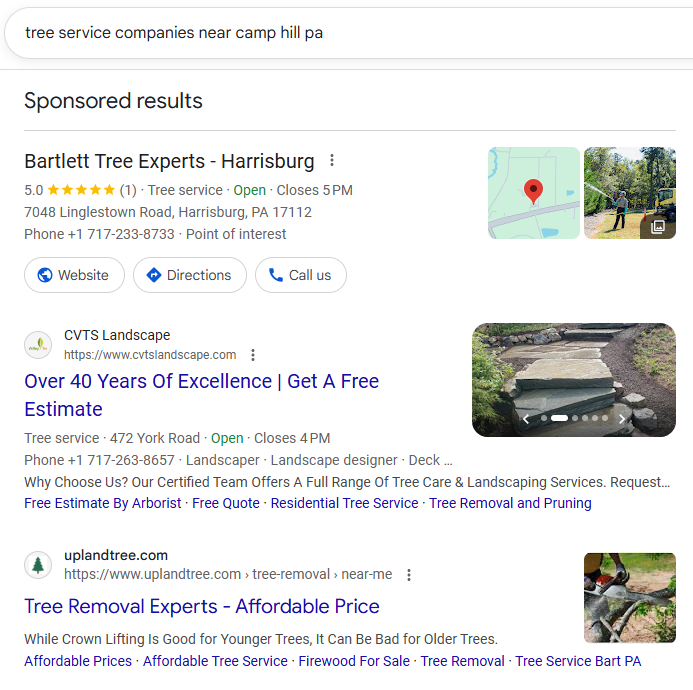
Here is the part that catches a lot of owners off guard. The crews booking the most profitable work are frequently not the most skilled in the area. They are simply the most findable. When a homeowner has a tree leaning toward the house and taps a few words into their phone, they rarely scroll past the first handful of options. Earning that position organically takes months. Buying your way into it can happen this week, and that speed is the entire appeal of pay-per-click for a business that cannot afford to wait two quarters for the phone to ring.
Where Tree Service Ad Budgets Go to Die
Plenty of tree service owners have tried Google Ads, watched a few hundred dollars vanish, fielded a couple of useless calls, and shut it off for good. The platform almost never deserves the blame. The way the account was built does.
Loose keyword targeting is usually the first culprit. The word “tree” attracts an enormous volume of searches that have nothing to do with hiring anyone. Queries like “how to fell a tree safely,” “free firewood near me,” “what kind of tree is this,” and “tree removal permit rules” all look related on the surface, but none of them belong to a buyer. Pay to show up for that traffic and the daily budget is gone by lunch with nothing to show for it.
The second leak happens after the click. Pointing an ad at a generic homepage that greets visitors with a company story and a menu of every service is a reliable way to lose them. A homeowner who clicked because they need a stump ground out will not hunt through paragraphs about your history to confirm you handle that. They bounce and dial the next listing instead.
Because Four Arrows Marketing works only with contractors, the campaigns we build start from how people actually search for trade work, not from playbooks lifted out of retail or unrelated industries.
Pairing Google Ads With SEO
The most common question we hear from owners weighing a marketing budget is whether to spend on ads or on SEO. For most companies, treating it as either-or is the mistake. The two channels do different jobs and feed each other.
SEO is the long game. Earning organic rankings for searches like “tree removal” or “emergency tree service” plus your city brings in calls without paying for every click, but it usually takes six months to a year of steady work before those positions hold. Paid search carries no such wait. A well-structured campaign can produce qualified calls inside the first two weeks.
There is a second benefit to running ads that owners tend to overlook. Paid search hands you a live readout of your market. You learn which services people search for most, which towns send the best leads, and which phrases convince someone to click. That intelligence makes your SEO far sharper, because you build organic content around demand you have already confirmed with real dollars. Running both together is how a tree company eventually owns more of the page and drives its cost per lead down.
The Google Ad Formats That Matter for Tree Companies
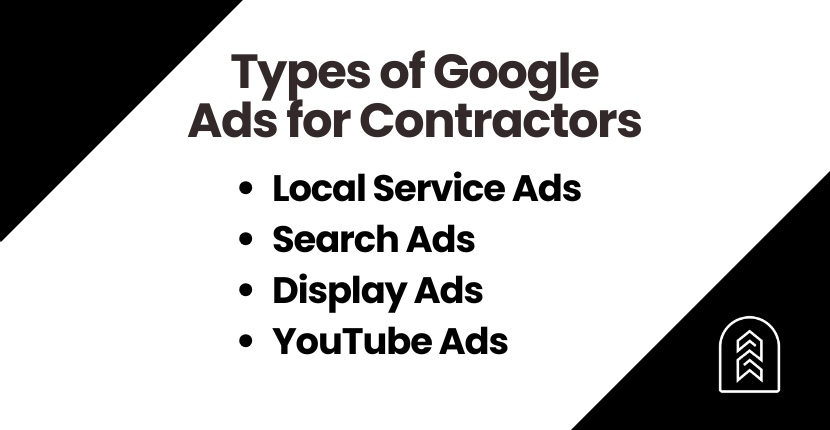
Local Services Ads
These sit at the very top of the results page, above the standard text ads and above the map. They show your company name, your star rating, and a Google Guaranteed badge confirming you have passed background and license checks. For tree work, that badge does heavy lifting. You are asking a homeowner to let a crew bring chainsaws, climbing gear, and sometimes a crane onto their property beside their house and power lines. Anything that signals legitimacy moves the needle. Local Services Ads also charge per lead rather than per click, which keeps the math clean on expensive, high-intent searches. You can review how the program works through Google’s Local Services Ads to understand how the badge is earned.
Search Ads
Search Ads are the text listings that appear when someone types a query into Google. For tree companies they usually deliver the most valuable traffic, because the searches carry obvious intent. A person entering “tree removal near me” or “emergency tree service” plus their town has already decided to hire. The race is just to be the first name they trust enough to call.
What separates a profitable Search campaign from a wasteful one is alignment. The keyword, the ad, and the landing page all need to point at the same thing. Send the click for “stump grinding” to a focused stump grinding page, not a catch-all services page. The tighter that match, the more clicks turn into booked jobs.
Display Ads
Larger jobs rarely close on the first visit. A full removal next to a structure or a commercial contract usually involves a stretch of comparing estimates. Display Ads keep your brand in front of those prospects as they browse other sites, and they shine for retargeting people who visited your site once and left without calling.
YouTube Ads
Video shows what a still ad cannot. A short clip of your crew taking down a big tree cleanly near a house, protecting the lawn and fence on the way out, builds confidence before a single conversation. Given how much homeowners worry about damage and safety, watching your team work carefully is persuasive, and paired with retargeting it keeps you front of mind while they decide.
What the First Ninety Days Realistically Look Like
The opening stretch tends to feel slow, and that is normal. Google’s system needs time to learn who clicks, how they behave on your pages, and which searches produce real interest. Tinkering with the account every other day only resets that learning and pushes results further out.
Around the third and fourth week, the search terms report becomes the tool you live in. It reveals every actual query that triggered an ad, and the list always holds surprises. Searches for tree service jobs, equipment rentals, bulk firewood, and do-it-yourself cutting guides routinely slip into accounts that lack proper filtering, and adding them as negative keywords is one of the highest-return tasks in the early life of any campaign.
By the ninety-day mark you finally have enough data to make confident moves. You can see which services bring leads, which towns respond, and where the budget works hardest. That is the point where a campaign shifts from setup mode into genuine optimization.
How the Best Tree Service Campaigns Are Run
A handful of habits separate the accounts that generate leads from the ones that quietly bleed cash.
Know your numbers before you set a budget. A roadside trim and a hazardous removal beside a power line sit worlds apart in revenue. Pin down your average job value across the mix of work you book, because that figure decides what you can afford to pay for a lead and still profit. The Tree Care Industry Association publishes business and financial guidance that can help you sharpen those numbers if you have never tracked them closely.
Build the negative keyword list on day one. Filters for terms like “tree climbing jobs,” “free wood chips,” “how to prune,” and “tree removal cost” should exist before the first ad ever serves. Then review the search terms weekly for the first couple of months, because fresh junk queries keep surfacing as volume grows.
Give every service its own landing page. A removal ad should land on a removal page, complete with photos of real jobs, proof of insurance, a few specific reviews, and an obvious way to call. General pages underperform because they push the sorting work onto the visitor.
Track your calls. Most tree leads, and nearly all emergency ones, come in by phone. Without call tracking through a tool like CallRail, you are guessing about which keywords actually generate revenue. Unique tracking numbers tie every call back to the ad and search that earned it.
Move your budget with the weather and the seasons. Push spend up when storms roll through and during the late-winter pruning window, then ease off in the quiet stretches. Being visible the hour a storm clears is one of the biggest edges a tree company can hold in paid search.
FAQ: PPC for Tree Service Companies
How much should a tree service company budget for Google Ads each month?
There is no single right number, because it depends on your average job value, the size of your market, and how aggressive your competition is. A useful starting point is to work backward from profit. If your typical job carries a healthy margin and you know roughly how many clicks it takes to book one, you can set a budget that keeps your cost per acquired job comfortably below that margin. Many tree companies in mid-sized markets begin in the range of a few thousand dollars a month and scale up once the data shows which services and towns return the most. Whatever the figure, give a campaign a runway of several months before judging it, since the early weeks are spent gathering the data that makes later spending efficient.
Can paid search actually capture emergency and storm damage calls?
Yes, and it is one of the most valuable things a tree company can set up. When severe weather hits, homeowners search for help right away and call whoever shows up first and looks trustworthy. The trick is being ready before the storm, not scrambling after it: a live campaign with urgency-focused ad copy, same-day response messaging, and a landing page that puts your phone number and service area at the very top. Companies that already have this running when the wind picks up routinely book a week of work in a single afternoon. Launching mid-storm usually means missing the window entirely.
Should residential and commercial or municipal tree work run on separate campaigns?
Almost always, yes. A homeowner with one dangerous limb, a property manager handling a portfolio of buildings, and a township maintaining public trees search with completely different language and judge companies by completely different standards. Forcing all of them into one campaign produces watered-down ads and muddy data you cannot act on. Splitting them into separate campaigns with their own budgets and dedicated landing pages lets you tailor each message, bid appropriately, and clearly see which side of the business your spending is actually growing.
How do licensing, insurance, and arborist credentials factor into my ads?
More than most owners expect. Tree work is dangerous and carries real liability, so trust signals do a lot of quiet work in a paid campaign. Featuring proof of insurance, any state or local licensing, and credentials such as an ISA Certified Arborist on your landing pages tends to lift conversion rates, because homeowners are uneasy about who they let near their house and power lines. Those same signals help you qualify for a Google Guaranteed badge on Local Services Ads, which improves both your placement and your credibility at the exact moment someone is deciding who to call.
Ready to Keep the Schedule Full Year Round?

A consistently booked calendar is not luck. The tree service companies that stay busy through every season are the ones a customer can find at the precise moment a tree comes down or a quote starts to feel overdue.
Four Arrows Marketing works only with contractors, and every client gets monthly strategy calls, weekly updates, and straightforward reporting that ties ad spend directly to leads and revenue. We serve tree service companies and other trades across Pennsylvania. If you want to see where your current marketing stands, request a free audit, or schedule a call to talk through what a paid search plan could do for your business.
–
Written by Adam Gante, Founder of Four Arrows Marketing. Last updated May 2026.
–